
A WELCOME MESSAGE FROM KEELY HEUER, CHAIR
In this, our sixth annual edition of the Department of Art History’s newsletter, we transition from a calendar year to an academic year format, giving us the pleasure of sharing more than eighteen months’ worth of happenings and achievements of our students, alumni, and faculty. As always, I am so inspired and proud of all that you have accomplished!
We continued many favorite activities of the department, including professional development events for our students and our annual Careers in Art History evening that features a panel of our wonderful alumnx. In 2025, we were honored to hear from Rachel Beaudoin (’15), Charlotte Calmer (’22), Christopher Daly (’12), Kate Peace (’06), and Lori Ann Youngblood (’08), and in 2026, it was a delight to be joined by Jennie Castillo (’07), Emily Finan (’17), Hannah Karkari (’19), Robyn Turk (’15), and Beth Wynne (’19). We appreciate the wise advice and encouragement that these impressive panelists shared with us. We have enjoyed hosting Tom DeLooza for his annual tintype demonstration, and we have taken busloads of students to New York City each semester to visit art museums and other cultural institutions. We are very grateful to Michele Di Palo Williams and Graeme Williams for so generously subsidizing these fieldtrips.
AHA The Art History Association continues to host a robust schedule of guest speakers each year, based on an annual theme. For 2024-2025, the talks focused on the connections between art history and disability studies and featured presentations by Dr. Elizabeth Howie (Coastal Carolina University), Dr. Susan Aberth (Bard College), Dr. Reva Wolf and Victoria St. George (SUNY New Paltz). In 2025-2026, the AHA’s student leaders invited scholars to address the topic of art and activism, including Dr. Miriam Basilio (New York University), Dr. Gregory Sholette (Queens College/CUNY Graduate Center), Dr. Kevin Repp (Yale University), Dr. Abigail Susik (Willamette University), and Allison Rudnick (Metropolitan Museum of Art).
The SUNY New Paltz Undergraduate Art History Symposium has continued to grow, with more than 300 students from across the globe presenting each year in a five-day virtual event. In 2025, our keynote speakers, Dr. Sharon Stocker and Dr. Jack Davis of the University of Cincinnati, told the story of their discovery of the Bronze Age Griffin Warrior Tomb in Pylos, Greece. This year, Dr. Charlene Villaseñor Black of Oxford University addressed the critical issue of decolonizing the field of art history. I am so grateful to the many students and alumnx who make it all possible by serving on the selection committee as well as session moderators and Zoom hosts. Many thanks also go to Susan DeMaio Smutny, who builds the event’s website each year and oversees the technological intricacies. Because of them, the Symposium continues to be a free event for all participants as well as one of the largest undergraduate research conferences in the world.
Art History in Action a series that began in Spring 2025, provides an opportunity for our students and colleagues across campus to learn about the exciting current research of our talented faculty members. We started with Dr. Jaclynne Kerner’s presentation on the iconography of Shriner sheet music covers, followed by Dr. Reva Wolf’s explanation of how her most recent book Translating Warhol (2024) came to be, starting with a Chinese translator’s query. The next semester, I spoke on interconnections between women, wool working, and funerary imagery on ancient Italian painted ceramics, and Dr. Elizabeth Lee taught us about large-scale iron Buddha sculptures produced in the Namhan River basin of Korea between the 10th and 14th centuries. This past spring, Dr. Ted Dewsnap shared how he conducts “above ground” archaeology at Lincoln Cathedral, and Beth Wilson discussed her discoveries of how Man Ray first used solarization (or the Sabattier effect) in his photography.
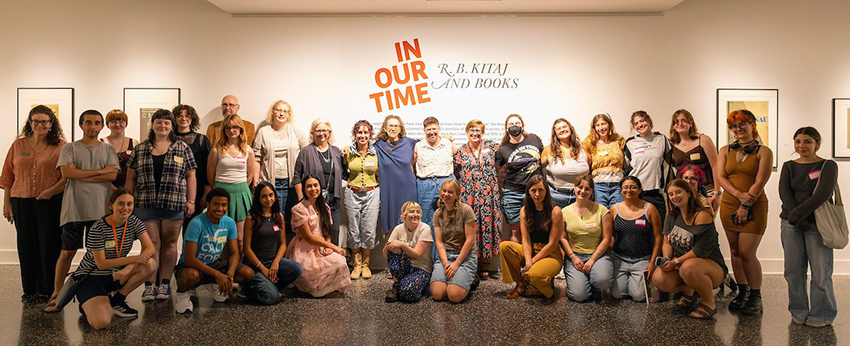
We are delighted to announce the recent opening of the exhibition In Our Time: R.B. Kitaj and Books at the Dorsky Museum of Art on June 21st. This special exhibition is curated by Dr. Reva Wolf in collaboration with students from her Fall 2025 course, Printmaking, Books, and R.B. Kitaj. We hope that you will visit before it closes on November 8th, and pick up your copy of the catalog!
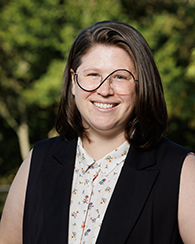
I am excited to welcome our newest full-time faculty member Dr. Dani R. Ezor Assistant Professor of Global Early Modern Art. Dr. Ezor received their PhD from Southern Methodist University and was a Visiting Assistant Professor at Kenyon College. I am most grateful to Dr. Jaclynne Kerner, chair of the search committee, and her colleagues Dr. Elizabeth Lee, Susan Smutny, and Dr. Sarah Wyman, for bringing us such a marvelous new colleague.
As a final note, we are so pleased to announce the departmental scholarship recipients for 2026-2027. Eryn Greene and Katelyn Oles were awarded the Art History Department Award and Isabella Barcher was selected for the Alison Wilhelmy ’09 Memorial Art History Scholarship to participate at an archaeological field school in Poggio Civitate, Italy.
It has been a wonderful whirlwind of art history activity since our last newsletter, and we look forward to another exciting year ahead thanks to all your support. If interested, you can further our work by contributing to the Department of Art History programming funds and scholarship awards at https://www.newpaltz.edu/give/arthistory/.
Amy Avolio '24
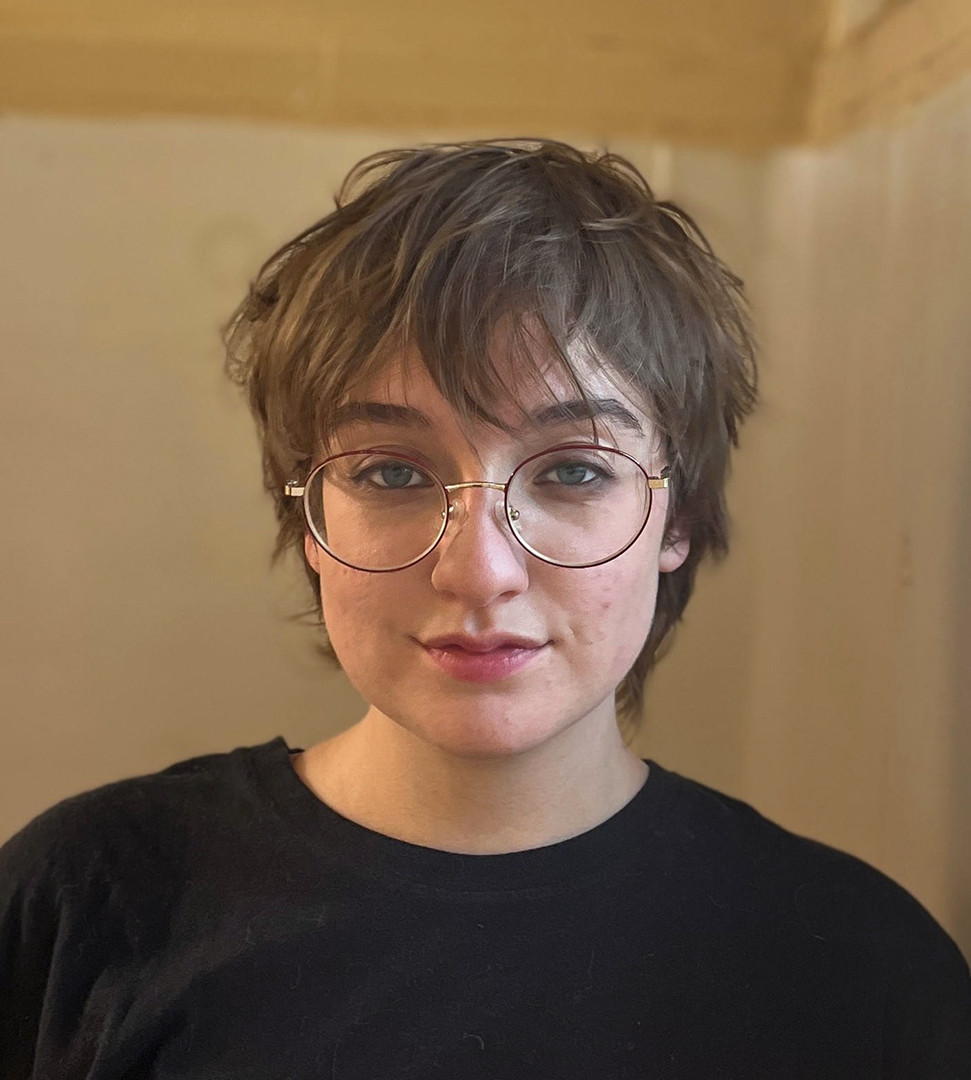
Amy graduated with a BA in Art History and a minor in Anthropology in the winter of 2024. In the summer of 2025, she was selected as a volunteer/student archaeologist at the Ancient Agora of Athens in Greece. There, she learned the basics of ancient Greek archaeology including the recovery, identification, and handling of objects. Currently, Amy is working as the Library Director for a small public library in Hancock, New York. Amy spends most of her time growing the library’s book collection, reading to children, and planning programs for the community. As an intersection of her interests from school and her current job, she recently created a children’s program inspired by ancient Greek art and the importance of myths and stories. Amy is excited to grow her career and look for more opportunities to learn and teach about the ancient world!
Mya Rose Bailey '22
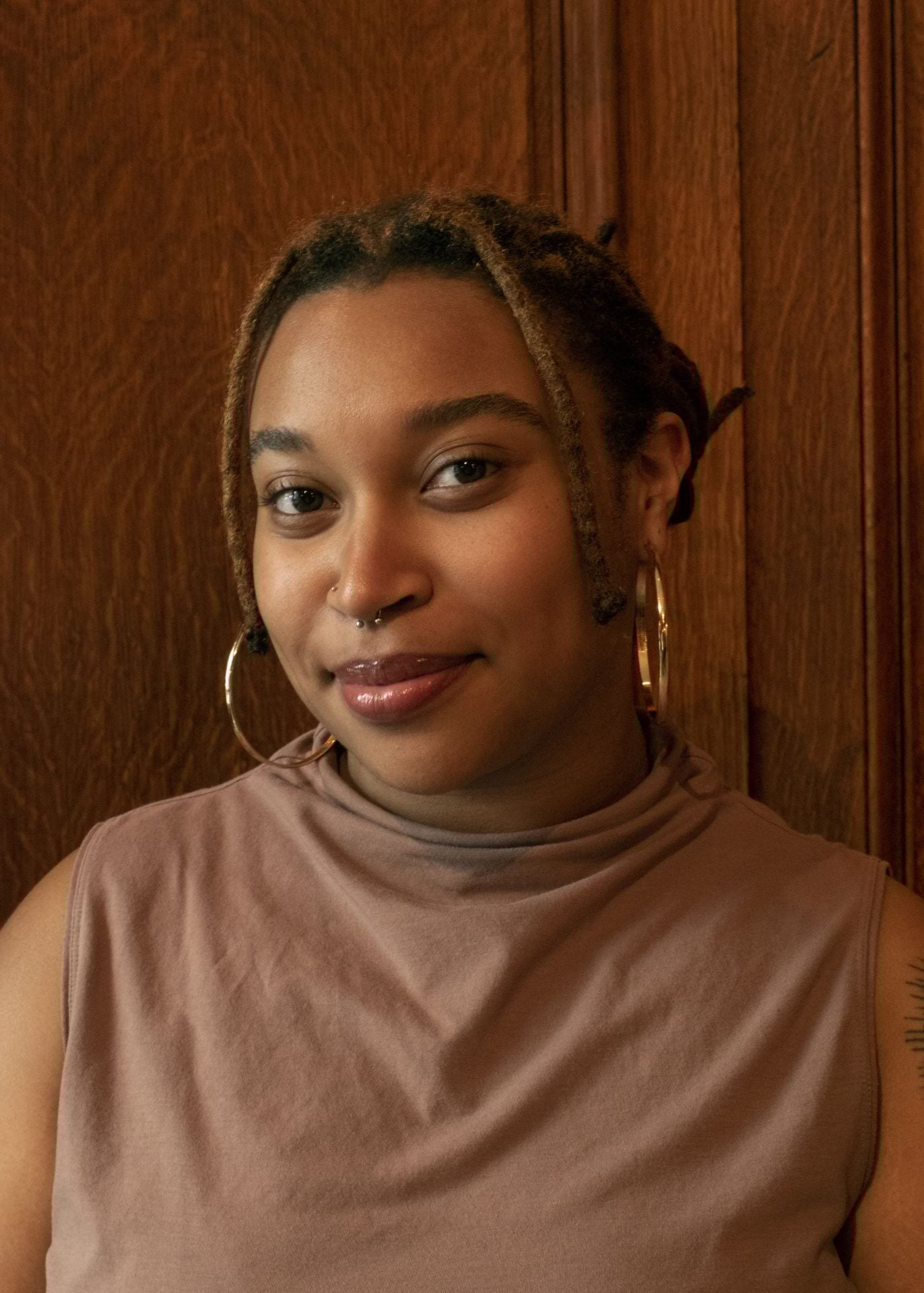
Mya, who graduated with a BA in Art History and a History minor, shared her good news with us! They write, "In May of 2025, I completed my Masters in Decorative Arts, Design History, and Material Culture from the Bard Graduate Center. My Qualifying Paper, "A Sense of Enslavement: Constructed and Contested Sensory Experiences at Thomas Jefferson’s Monticello and Poplar Forest," was awarded the Horowitz Foundation for the Arts prize. After completing my degree, I joined the Preservation Society of Newport County for a year-long Curatorial Research fellowship. My fellowship concluded in August 2026 with the opening of our semiquincentennial exhibition Revolution Reimagined: Evolving Stories from Newport's Past. I have most recently begun a new role as a Curatorial Research Associate at the High Museum of Art in Atlanta, GA.
"In the past year, I have had the pleasure of presenting and publishing my ongoing research concerning Jeffersonian studies, built environments, and multisensory experiences of enslavement with the Society of Architectural Historians in Mexico City, Boston University's Sequitur Journal, and the May/June issue of The Magazine Antiques. Additionally, my broader research on decorative arts, material culture, and Blackness in early America has been supported and hosted by the Decorative Arts Trust, The Furniture Society, the Rotch Jones Duff House, and Historic Trappe."

Steven Baltsas '23
Steven graduated in 2023 with a BA in Art History and English (Creative Writing). In Spring 2025, he earned his MA from the Winterthur Program in American Material Culture at the University of Delaware. During his last semester of graduate school, Steven had several opportunities to develop his curatorial skills. As curatorial assistant at Lyndhurst, his responsibilities included writing labels for the exhibition, Alexander Jackson Davis: Designer of Dreams. Additionally, he contributed research on Davis's Gothic-style domestic interiors and furniture to the exhibition catalog, which also featured his former advisor, Dr. Kerry Dean Carso. The exhibition went on to win an award from the Victorian Society of New York. In May 2025, he became a William L. Thompson Collections Fellow with the Jenrette Foundation and traveled to Millford, an antebellum estate in South Carolina. There, he researched New York furniture made for the Southern market during the 1840s and 50s.
Currently, Steven serves as the Decorative Arts Trust's Peggy N. Gerry Curatorial Fellow at Preservation Long Island. A two-year position, this role is centered around the research and interpretation of Long Island-made furniture, 1660–1860. For much of this first year, Steven photographed the organization's entire furniture collection and completed fieldwork. In July 2026, Steven and chief curator Lauren Brincat debuted their exhibition, Wood and Water: Furniture on Long Island, 1660–1860. They are co-editors of the exhibition catalog, which features essays by contributing historians and extended catalog entries. Their next study will look at Anglo-Dutch society and furniture patronage in eighteenth-century Queens County.
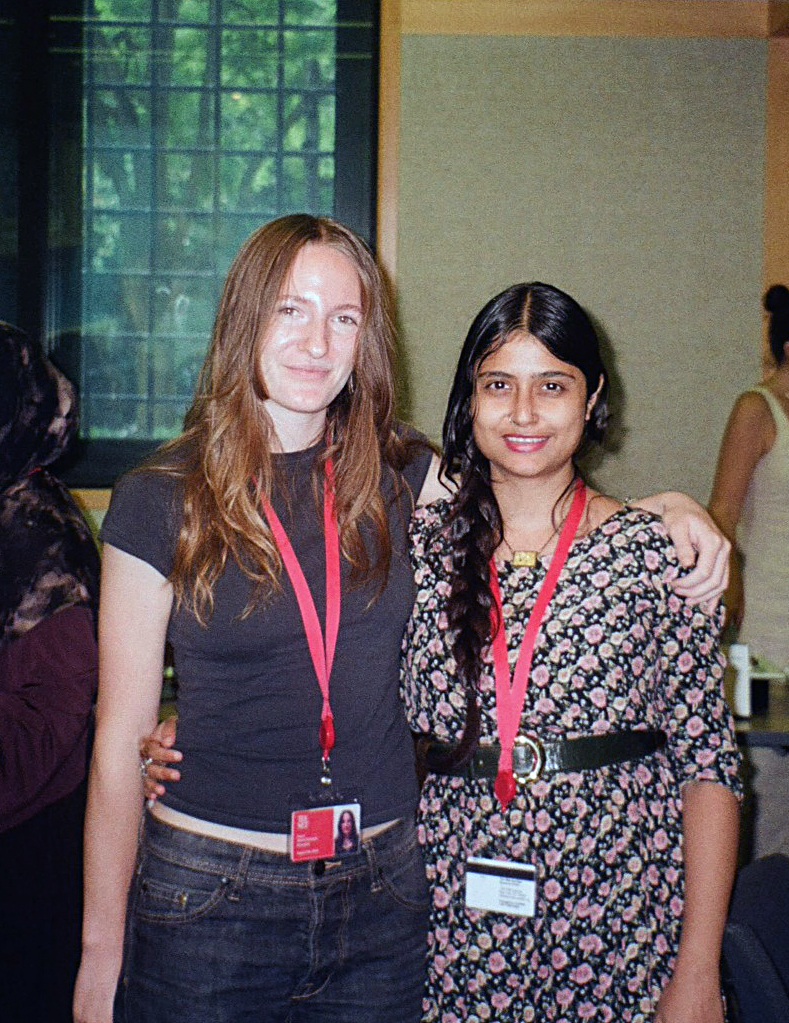
Willow Baribault (left) with fellow Metropolitan Museum of Art Asian Art intern, Debarati.
Willow Baribault '25
After graduating with a BA in Art History and Philosophy and a Religious Studies minor in December 2025, Willow Baribault began working as a Legal Assistant in Kingston, New York. However, she took a break from that this summer for an internship at the Metropolitan Museum of Art. At the Met, she conducted provenance research in the Asian Art Department under Qamar Adamjee for just over 4,000 antiquities in the collection. This entailed reviewing old auction catalogues starting from 1970, Met and other publications including those objects and similar, curatorial binders, and so on. It was meticulous, often forensic work that demanded the same analytical precision she had honed in her art history and philosophy coursework at New Paltz.
Now back in Kingston, Willow has been reflecting on how this summer deepened her understanding of the ethical and legal frameworks surrounding cultural heritage, an unexpected bridge between her day job and her academic training. She hopes to return to New York City soon for a more permanent role in the museum world.
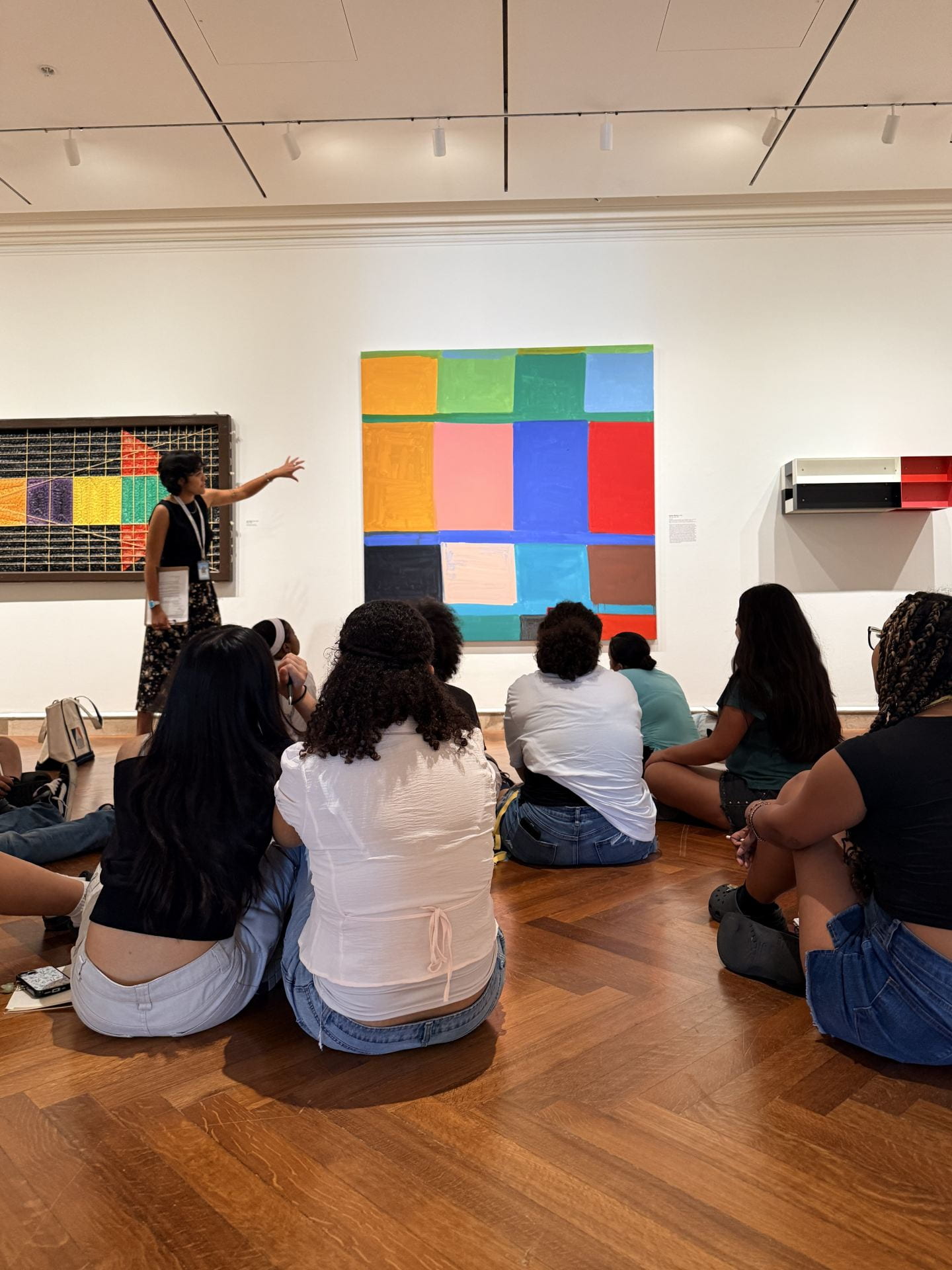
Ciera facilitating a discussion with a youth writing program around Stanley Whitney's 2021 artwork, See, See, Love.
Ciera Browne '24
Earning BAs in both Art History and Adolescent Education: Social Studies in May 2024, over the course of this year, Ciera has been steadily building a career in the Museum Education field. She recently completed a ten-month Museum Education Fellowship with the Brooklyn Museum of Art. Within this role she created and facilitated countless K-12 guided tours and worked across the education department's Teen, Family and Community, and School Programs. Throughout this fellowship she developed a qualitative research project titled, "Reimagining Curatorship Through Collectivity," which she presented to Brooklyn Museum Staff this past June. Her research explored and advocated for the adoption of expansive curatorial models based in cross-departmental collaboration.
Currently, Ciera finds herself working as a Museum Education Teaching Assistant at the Addison Gallery of American Art in Andover, MA, where she has been fortunate enough to continue developing innovative educational programming that responds to the Addison's unique collection.
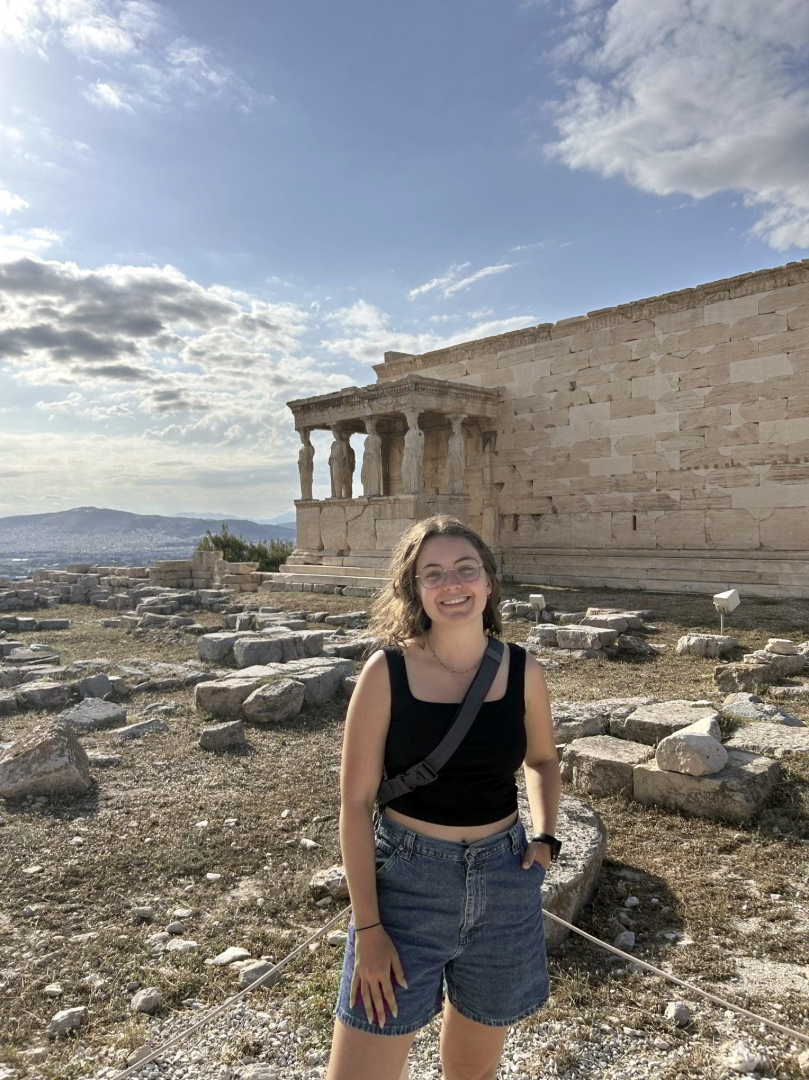
Brooke Cammann '23
Brooke earned a dual degree, BA in Art History and BS in Chemistry with a minor in Italian studies, in 2023. Recently, she has been in Thessaloniki, Greece, finishing up her Erasmus Mundus Joint Masters in Archaeological Materials Science. Her thesis project working with superhydrophobic coatings for the protection of stone heritage is the culmination of the two-year masters program funded by an EMJM scholarship. During her studies she attended the University of Évora in Portugal, Aristotle University of Thessaloniki in Greece, and Sapienza University of Rome in Italy. In Summer 2026, Brooke returned to Murlo, Italy, for her fifth season with the Poggio Civitate Archaeological Project and her fourth season working in the conservation lab. Brooke looks forward to what comes next and is working towards entering an art conservation graduate program in the future.
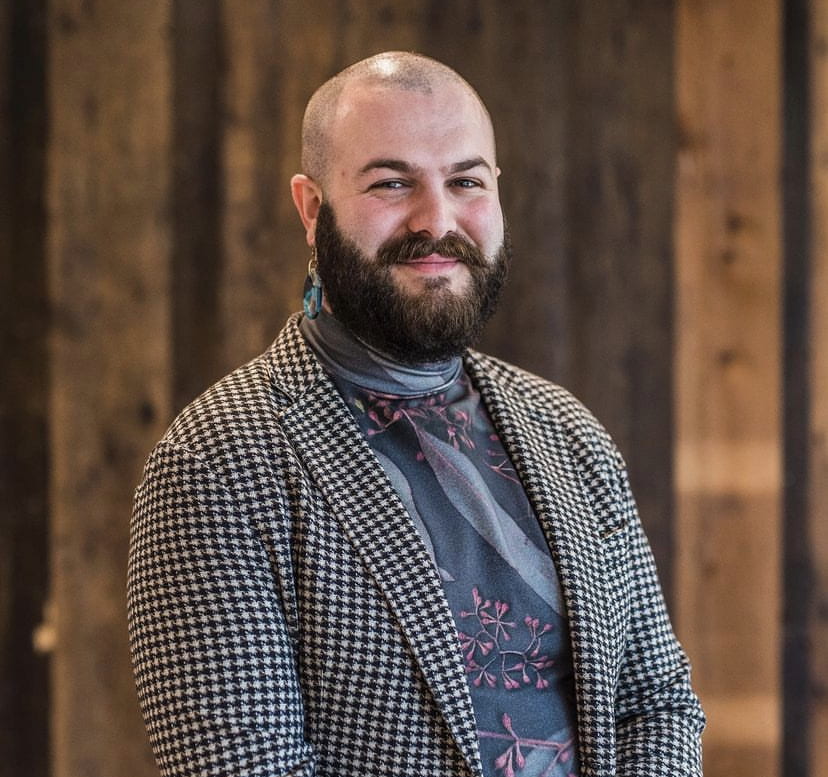
Gabriel Chalfin-Piney-González '18
Gabriel Chalfin-Piney-González is a multi-hyphenate artist and administrator (SUNY New Paltz, BA Art History, minor Art Studio, and School of the Art Institute of Chicago, MA in Arts Administration and Policy) who has over 15 years of experience working with community art organizations, orchestrating multidisciplinary programs, and supporting artists in a career-changing capacity. They have managed residencies, cohorts and artist support programs for Colby Museum’s Lunder Institute for American Art, Woodstock Byrdcliffe Guild, Cornell Cooperative Extension, Vassar College’s Powerhouse Theater, Chicago Parks District, among others. Their research practice is informed by self-taught artist practices, oral and ecological histories, and reciprocal collaboration. Gabriel holds a MA in Art Administration and Public Policy from the School of the Art Institute of Chicago and a BA in Art History and Printmaking from the State University of New York at New Paltz. They are the founding executive director of the Jewish Museum of Chicago.
In April 2025, Gabriel shared the following announcement with us: "The Hyde Park Center (Chicago, IL) is very excited to welcome Gabriel Chalfin-Piney-González, our new Exhibitions and Residency Manager. Gabriel has extensive experience in artist-support roles, working with residencies and other cohort-based programs. 'I am very excited to think and work with Gabriel. I know that their deep care for artists' practices and thoughtful approach to stewarding programs will have a great impact on our programs.' Mariela Acuňa, Director of Exhibitions and Residency.
Gabriel commented, “I believe that time, space, and funding are the initial steps that build an infrastructure of care to support artist practices. My continual pursuit as an organizer has been creating tailored opportunities for artists, moving them closer to building a balanced life that yields community and joy in their artistic labor. I am deeply grateful to move into the role of Exhibitions & Residency Manager at the Hyde Park Art Center."
Since starting at the Hyde Park Center, Gabriel has launched three new residencies at the Art Center: The Midwest Curatorial Residency, supporting local research trips, Beyond Bodies of Work, developed in partnership with 3Arts which supports Deaf and disabled artists, as well as a partnership with The Lit & Luz Festival of Language, Literature, and Art. Congratulations Gabriel!
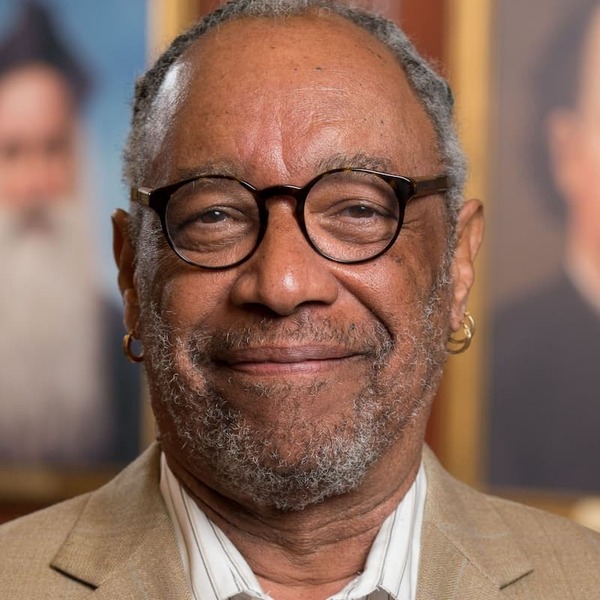
Robert Randolf Coleman ‘70
Dr. Robert Randolf Colman earned his BA in Art History at SUNY New Paltz and his MA and PhD (1988) at the University of Chicago. He is Emeritus professor of Italian art, 1600-1800, at the University of Notre Dame. He is a specialist in old master drawings and the cataloguer of the drawings collection of the Veneranda Biblioteca Ambrosiana, Milan. Since retirement, Coleman has been a Research Specialist of Italian Paintings 1400–1800 at the Raclin Murphy Museum of Art, University of Notre Dame. "Coleman provides necessary comprehensive cataloging for the holdings of Italian paintings at the Raclin Murphy Museum of Art. By providing extensive literature reviews, compiling bibliographies and exhibition histories, gathering relevant comparandi, reviewing biographical information about the artists and previous owners, corresponding with international scholars, analyzing iconography, researching provenance, identifying historical contexts, and proposing updated attributions."
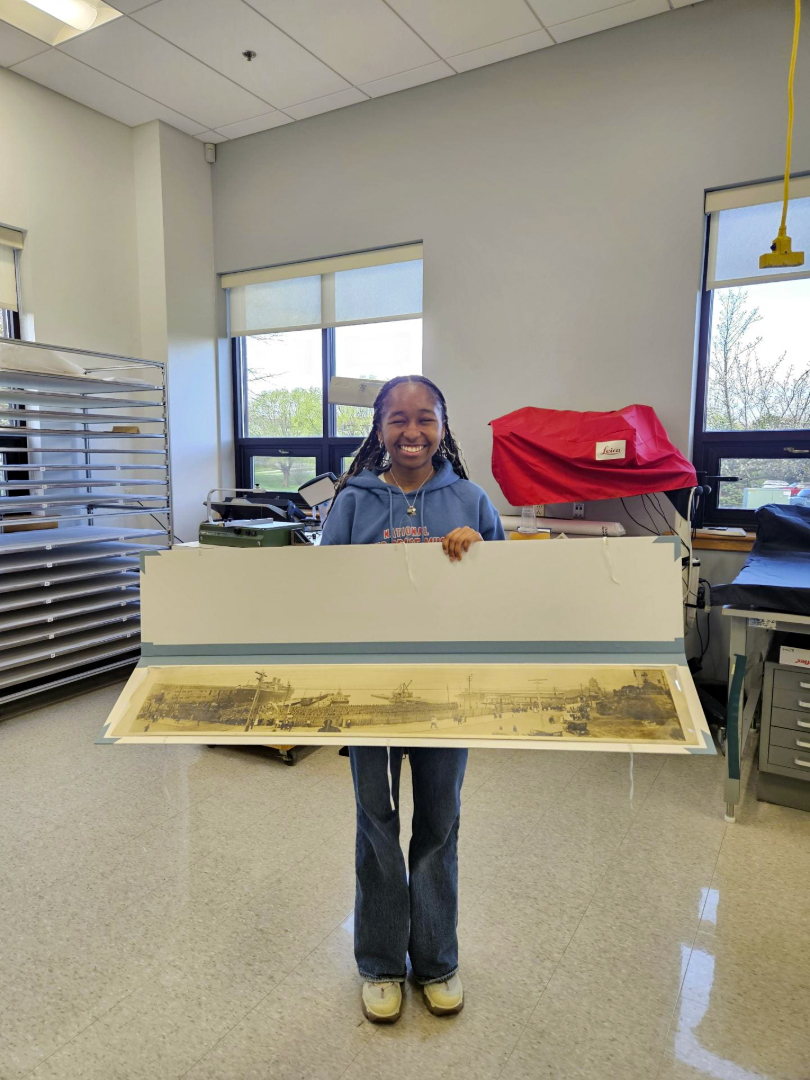
Jazmyne Daily-Simpson '25
After Jazmyne graduated with a BFA (Honors) in Graphic Design and a minor in Art History in May 2025, she spent Summer 2025 in Washington, DC, as a UCLA/Getty Mellon art conservation intern at the Smithsonian National Museum of African American History and Culture. There, she spent time learning about book, textile, photography, and objects conservation. Since September 2025, Jazmyne has been employed as a conservation assistant at Penn State University Libraries where she helps care for the various items in the library's collection.
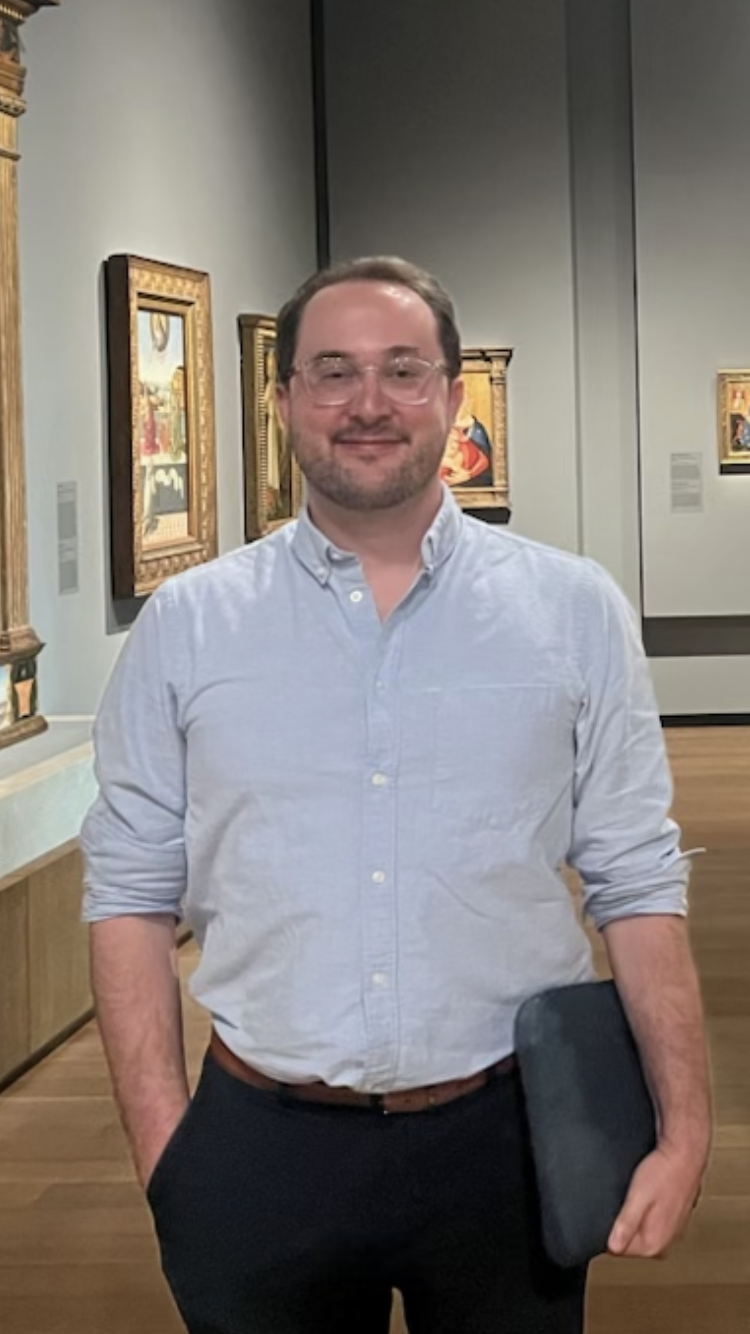
Christopher Daly '12
Since January 2025 Christopher Daly (BA Art History with a minor in Italian Studies) has continued his two-year term as the Andrew W. Mellon Postdoctoral Curatorial Fellow in the Robert Lehman Collection at the Metropolitan Museum of Art, where in September 2026 he will join the staff as the department's collection specialist. As the Mellon Fellow, Chris catalogued the Lehman Collection's Italian paintings, contributing over 50 entries which can now be read on the museum's online catalogue. He has also been kept busy with publications, with "A Botticelli fragment in Mexico City," published in The Burlington Magazine (vol. 167, no. 1470, September 2025, pp. 862–871), "Pietro e Polito del Donzello: un dipinto poco noto in Spagna e altre aggiunte” in Paragone (vol. 76, nos. 181–182, May–July 2025, pp. 39–55) and "Novità per Arcangelo di Jacopo del Sellaio,” co-authored with Nicoletta Pons in Paragone (vol. 76, no. 184, November 2025, pp. 3–23).
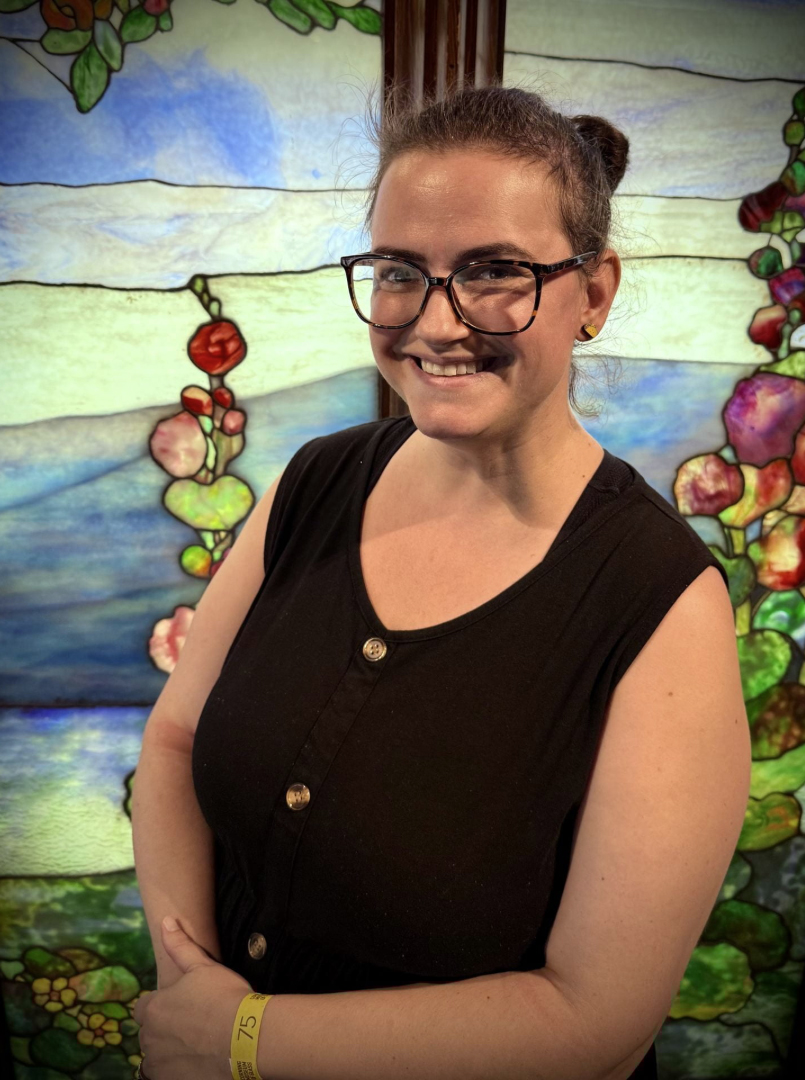
Einav Zamir Dembin '09
Einav reports that as of August of 2025, she was promoted to Director of Education at the Nassau County Museum of Art on Long Island. She graduated from SUNY New Paltz with a BA in Art History and minors in both Studio Art and Ancient Studies, and then went on to an MA in Material Culture Studies from the Bard Graduate Center, and a PhD in Art History from The University of Texas at Austin.
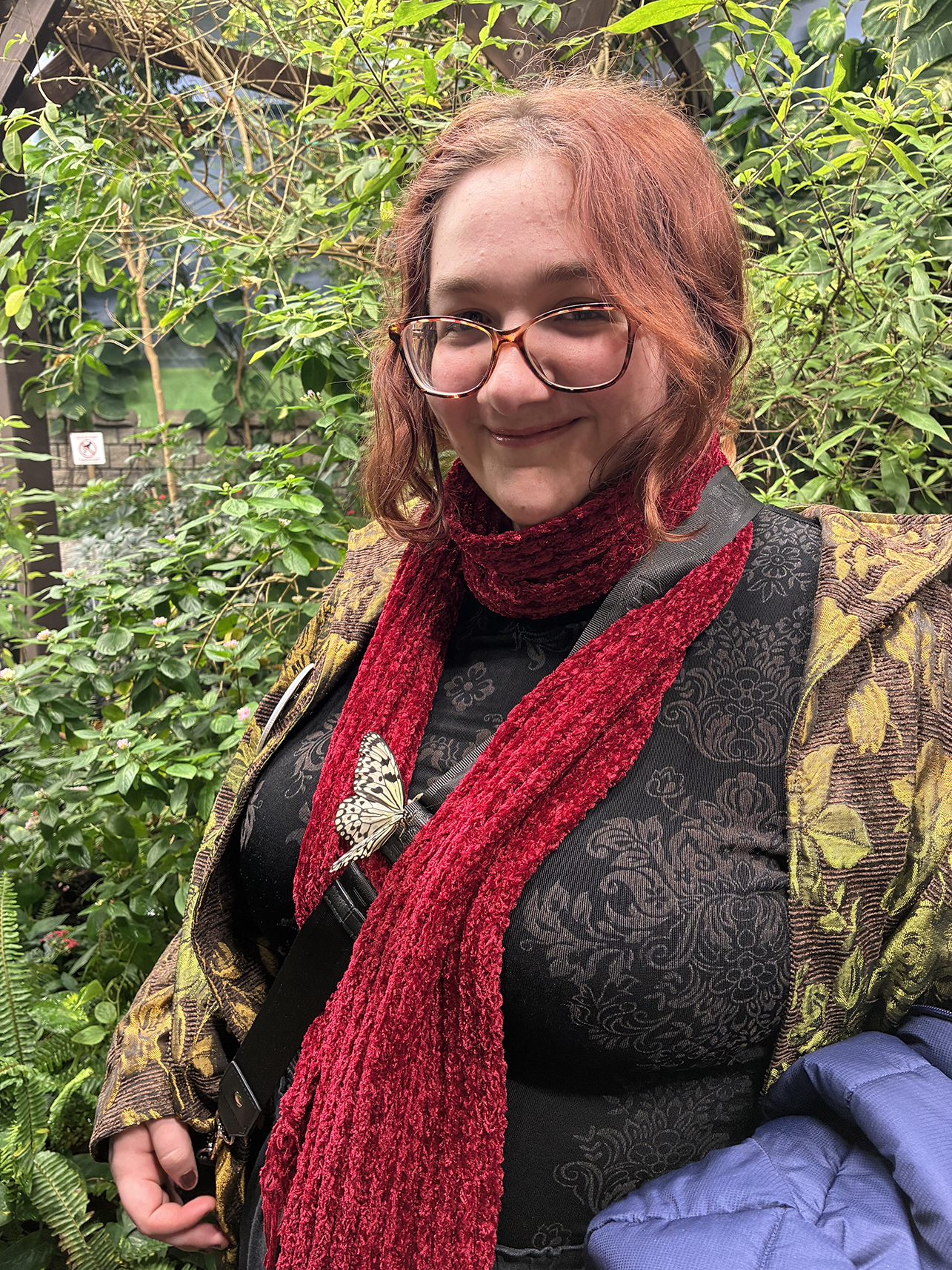
Anna DiPiazza '25
Anna graduated with a BA in Art History and a minor in History in May 2025. During her last semester senior year, Anna continued as an Administration and Collections Intern at the Dorsky Museum, as well as serving as an Archives Intern at Historic Huguenot Street. Anna was also a valued assistant at the Visual Resources Library in the Department of Art History where she prepared many image records for the New Paltz Visual Resources Collection database. In Summer 2025, Anna was employed as the Archivist for the George and Kay Berry Memorial Library at Silver Bay YMCA Conference and Retreat Center located on the northern part of Lake George. In this role, she organized an exhibition of artifacts related to Silver Bay's history.
Anna returned to campus for the Convivium in Spring 2026, and we were grateful that Anna also volunteered as a moderator for several sessions of the 2026 SUNY New Paltz Undergraduate Art History Symposium. Anna reports that she finally purchased a car and is currently working at her family’s butcher shop on Long Island. She is also looking forward to a trip to South Korea this fall!
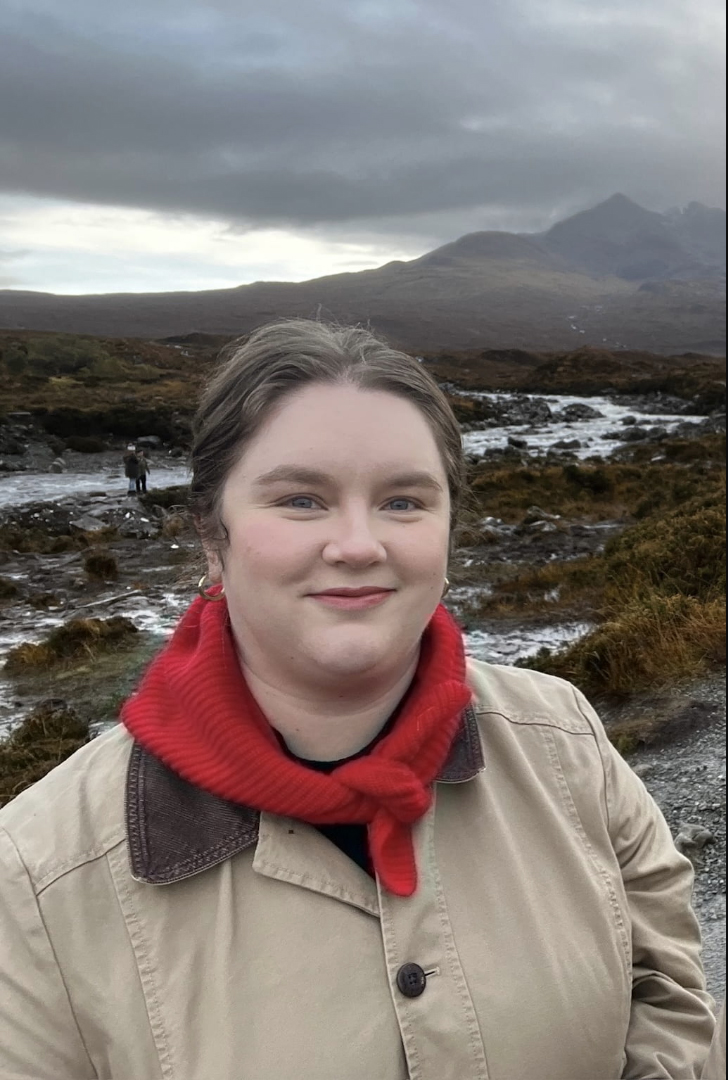
Rebecca Dubois '18
Rebecca, who earned her BA in Art History and Spanish, and an MA in Archives and Records Management at the University of Glasgow, has been working as an archivist at the Ralph E. Ogden Foundation since 2023, digitizing and housing family records. In the summer of 2025 she interned at the Ellsworth Kelly Studio in Chatham, New York, digitizing sculpture fabrication records.
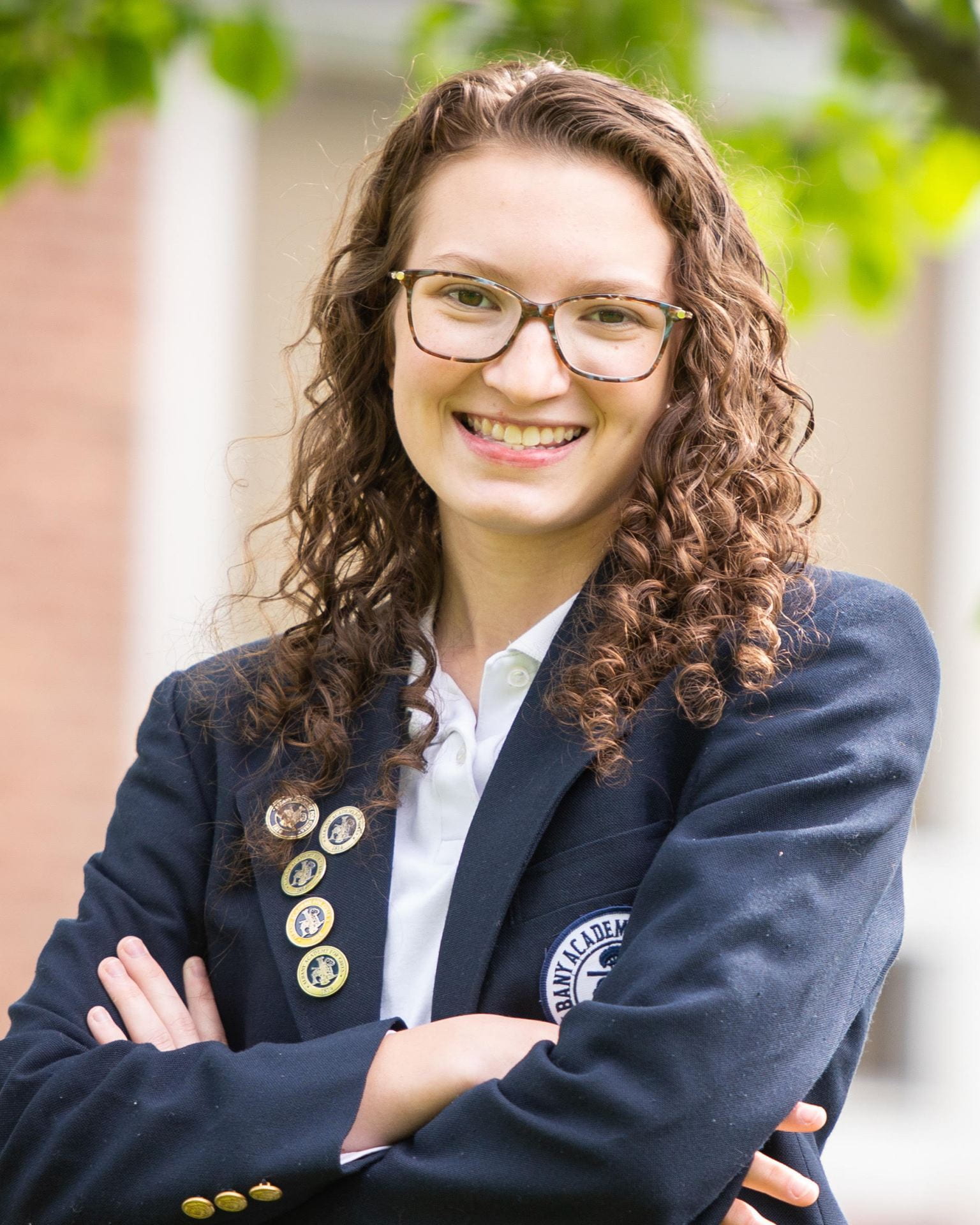
Jewels Graziano '25
Jewels, who graduated in Fall 2025 double-majoring in Art History and English, recently completed the first semester of her Master's in Information Science on the Archives track at SUNY Albany. Around the same time, she began an internship at the New York State Library's Manuscripts & Special Collections unit, where she has processed her very first collection—a small box that held foundational records from a female seminary in Albany, New York. The finding aid she created is available to view on the State Library’s website.
Most of summer 2026 Jewels has spent at MSC too. She recently completed processing a collection donated to the State Library by the late Laurence (Larry) Hauptman, Distinguished Professor Emeritus of History at SUNY New Paltz. His scholarship and advocacy pertained to Native American history, especially that of the Iroquois Confederacy. Since Professor Hauptman's collection is newly complete, it is not yet available to the public, nor is the finding aid that Jewels wrote for it, but both will be open to research shortly. Keep your eyes peeled!
Jewels was also given the honor of writing an adjoining blog post for the State Library's page, celebrating Professor Hauptman's connections to New Paltz and the State Library. She is happy to have kept her alma mater close by as she navigates these new experiences.
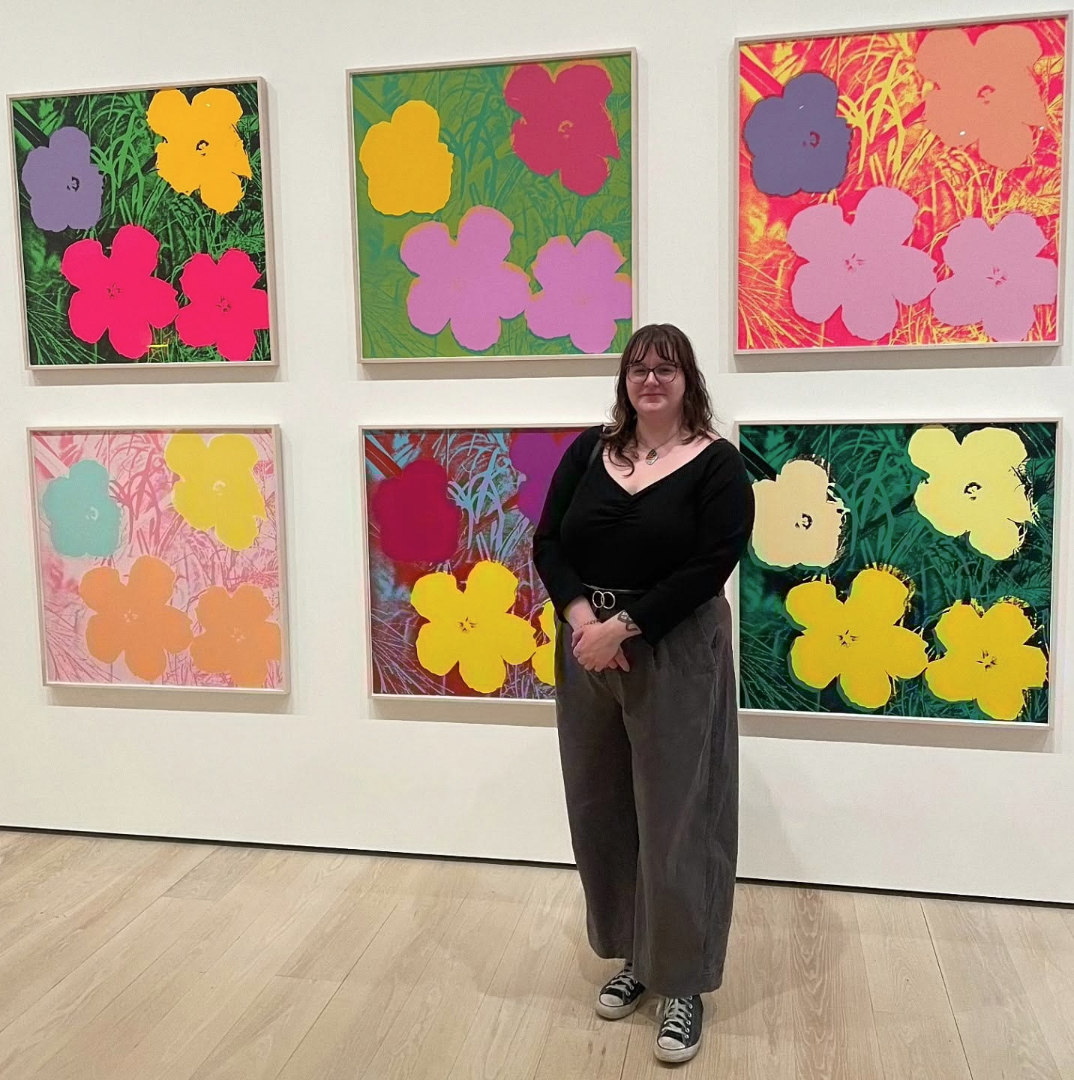
Christine Hanson '20
Christine graduated with a BA in Art History and an English minor in 2020. She has just finished her first year in the Masters in Library and Information Science program, with a concentration in Archives, at Long Island University. This past March, she began to work part-time at a Suffolk County public library as an adult reference librarian. In her role, Christine offers help to patrons, plans and runs programs, and helps to ensure that day-to-day operations run smoothly. Christine is expected to graduate in the fall of ‘27 and hopes to continue either being a reference librarian or to work in archives.
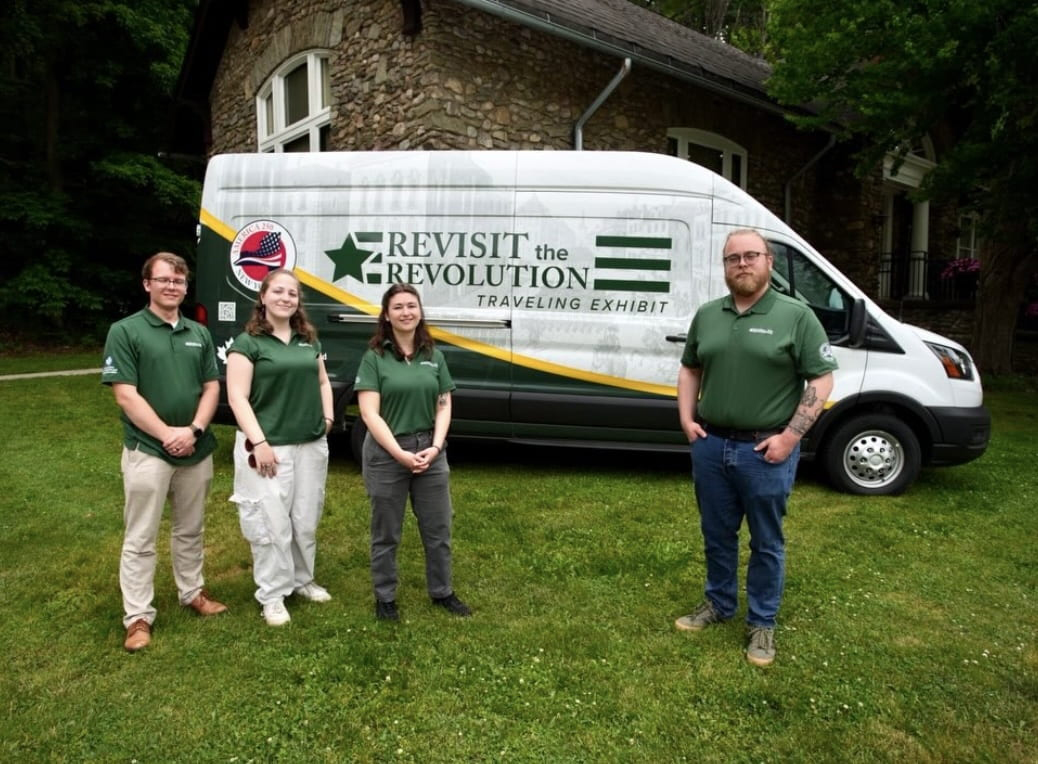
Bridget Hermann, second from left, and her fellow interpreters with the Revisit the Revolution traveling exhibition van.
Bridget Hermann '24
With a BA in History and minors in Art History and Anthropology, Bridget worked in the archaeology department of the New York State Office of Parks, Recreation and Historic Preservation. Subsequent to the completion of that temporary position, she returned to the Parks Department as an interpreter for their traveling Revisit the Revolution exhibition. Bridget reports, "it’s been great traveling throughout New York and bringing history to more people!"
Our department has also had the pleasure of working with Bridget since graduation because she has volunteered as a session host for the SUNY New Paltz Undergraduate Art History Symposium in both 2025 and 2026. Thank you Bridget!
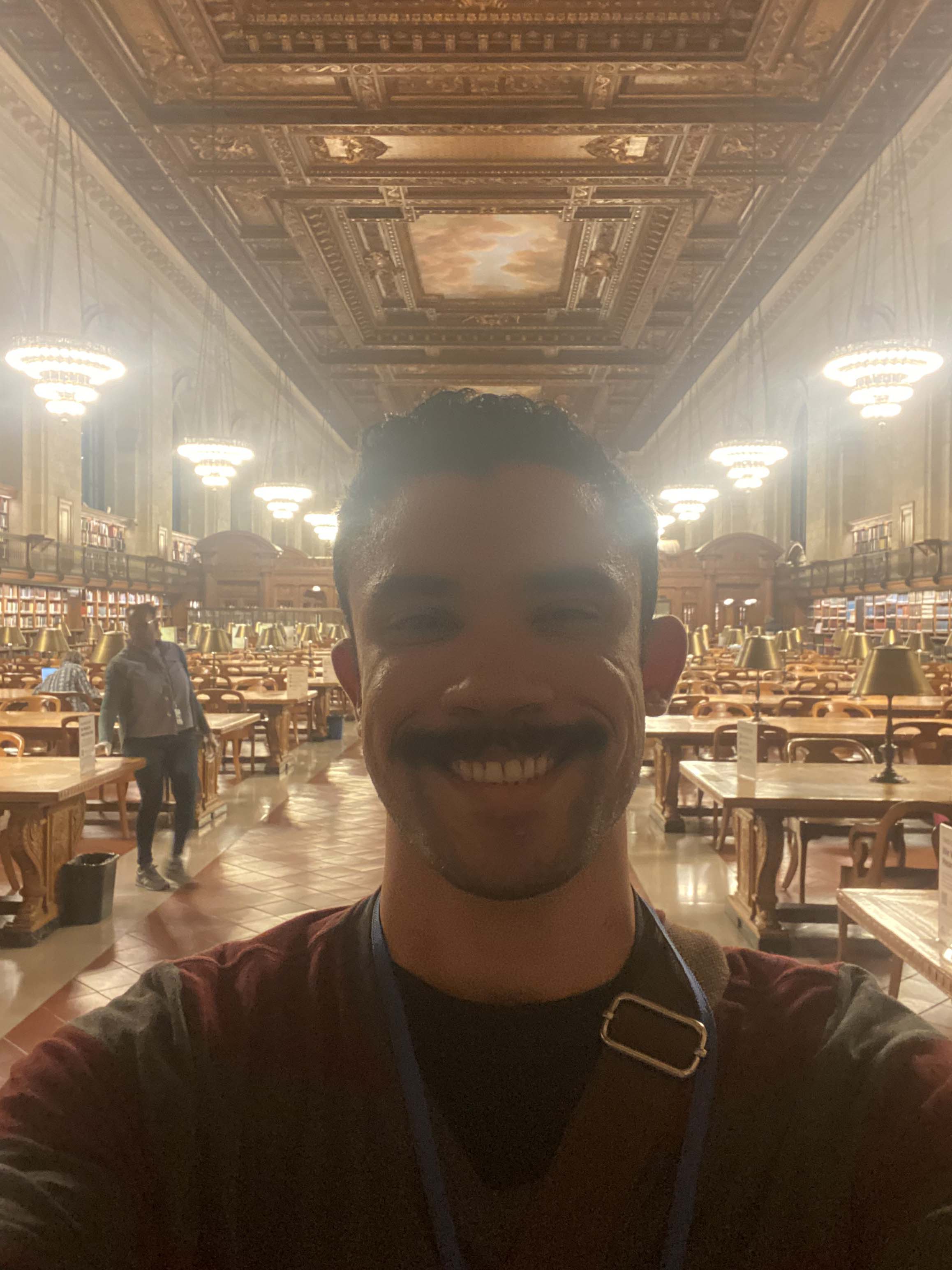
Jorell Herrera '23
Jay earned his BA in History with an Art History minor in 2023. He is happy to share that he recently accepted a part-time position as a Visitor and Research Experience Associate at the New York Public Library's 42nd Street branch! He assists with wayfinding throughout the Stephen A. Schwarzman Building, issues/renews library cards, and helps connect visiting researchers and scholars with academic resources.
Jay is also beginning his second year as a graduate student at the CUNY School of Professional Studies in Museum Studies. He reports, "my class on museum education and interpretation is teaching me how to design innovative and exciting educational programs for museums, giving me an opportunity to shadow and observe educational programs at museums to look for ways in which these institutions are currently moving to further streamline their programs." Jay expects to graduate by fall of 2027 and is excited to see what the rest of his program will offer.
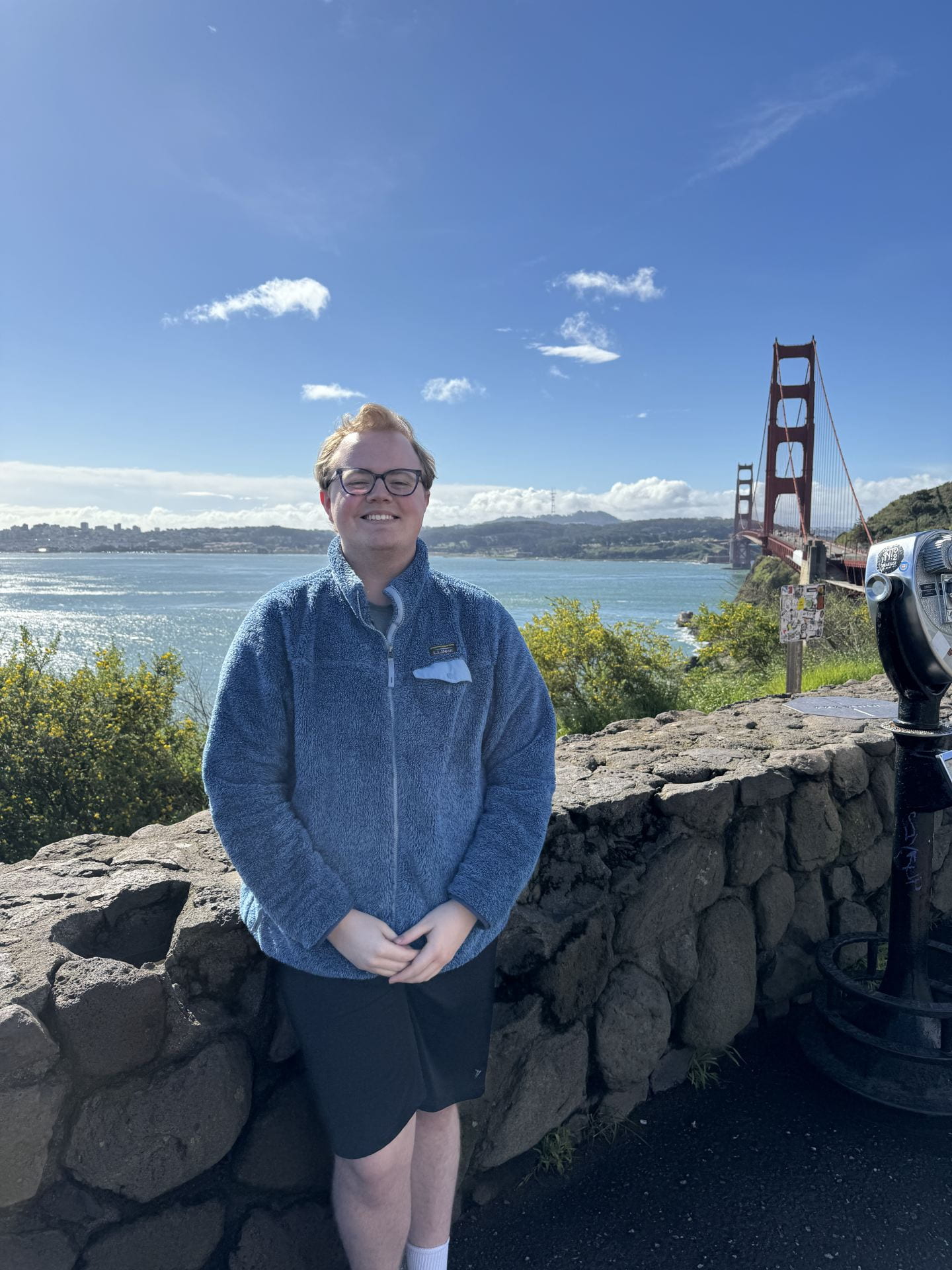
Ben Kuhn '24
Ben earned a BA in Creative Writing with minors in Art History and Philosophy in 2024, and writes that they use the skills gained, particularly in art history, very frequently. "Memorization, critical thinking and analysis come in very handy when navigating difficult situations." At the end of summer in 2025, Ben traveled to London. "During my days of sight-seeing and evenings attending West End shows, I got to visit art pieces I studied in my art history classes at New Paltz, such as the Rosetta Stone and the Arnolfini Portrait, first-hand at the British Museum and the National Gallery of Art!"
We are grateful to Ben for continuing to serve as a marvelous session host for the SUNY New Paltz Art History Symposium in 2025 and 2026. Ben shares, “Doing so has given me the chance to reconnect with former classmates and professors alike, as well as watching new cohorts of undergraduate students present innovative, original scholarship! As a former speaker and moderator, the Symposium was unlike anything I experienced as an undergraduate, and I will always cherish the time and effort put into this wonderful event.”
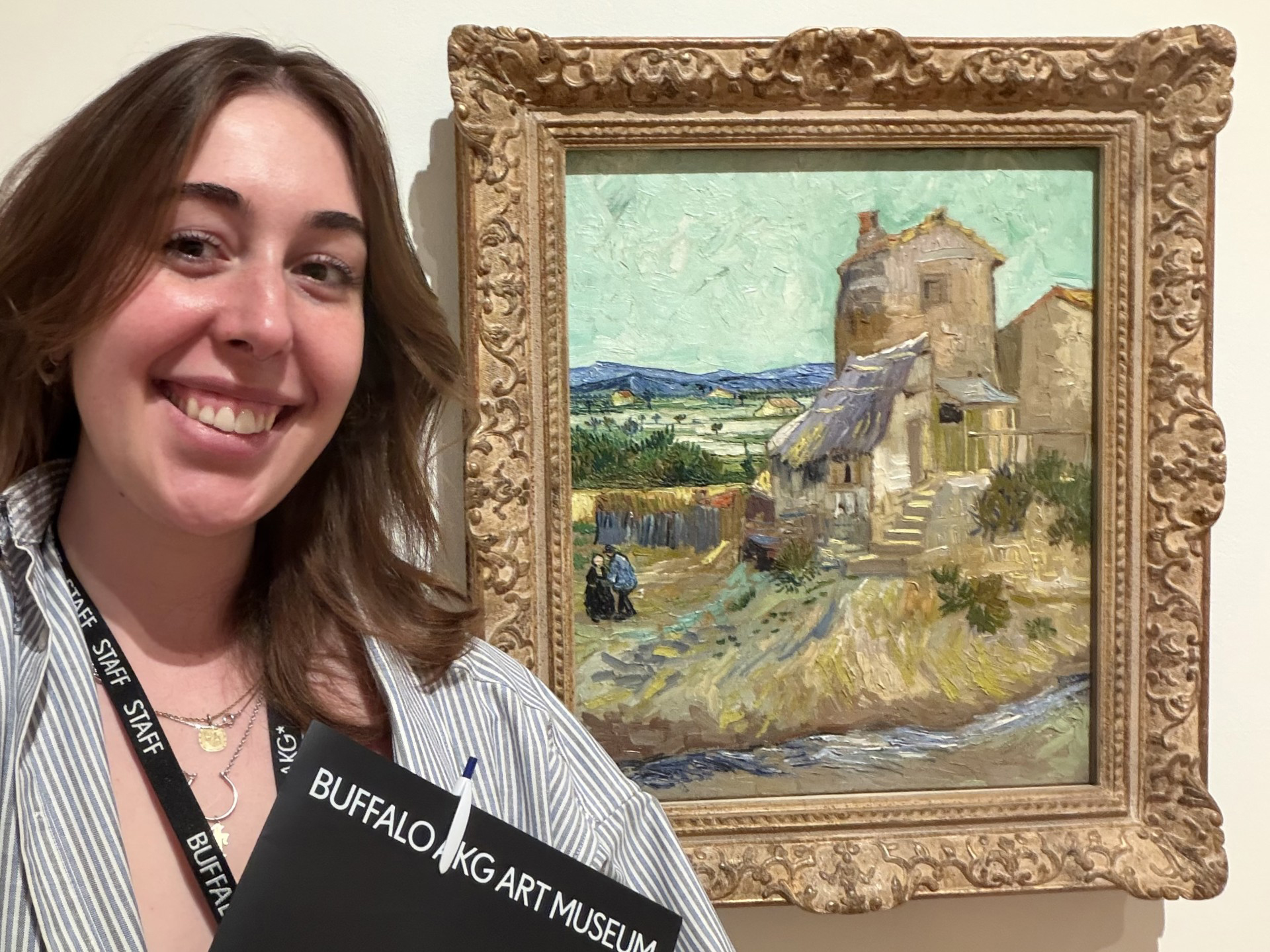
Taylor Lannon '23
Taylor, who graduated with a BFA in Ceramics and a BA in Art History in Fall 2023, has paired her studies in art history with experience working as a Gallery Attendant at Dia: Beacon while living in the Hudson Valley, and now that she has moved back to Western New York, employment as a Visitor Experience Associate at the Buffalo AKG Art Museum. Her photo is from her first day working at the Buffalo AKG, taken in front of a Van Gogh she recalls having visited as a child!
Taylor enthuses, "I get to educate visitors about the history of the spaces they’re in as well as engaging visitors of all ages and levels of interest about the art on display. I pride myself on being able to make the art on view accessible and I use a lot of what I learned at New Paltz in the galleries as well! I’m fortunate to work alongside a team of really amazing people, all so passionate about art and art history. I and many of my colleagues are artists ourselves! I continue to learn the more I work in museums and lately I’ve been looking to expand upon my experience and my passion for art and art history. I’m interested in becoming an archivist or librarian and plan to apply this year to a master's program in library and information science."
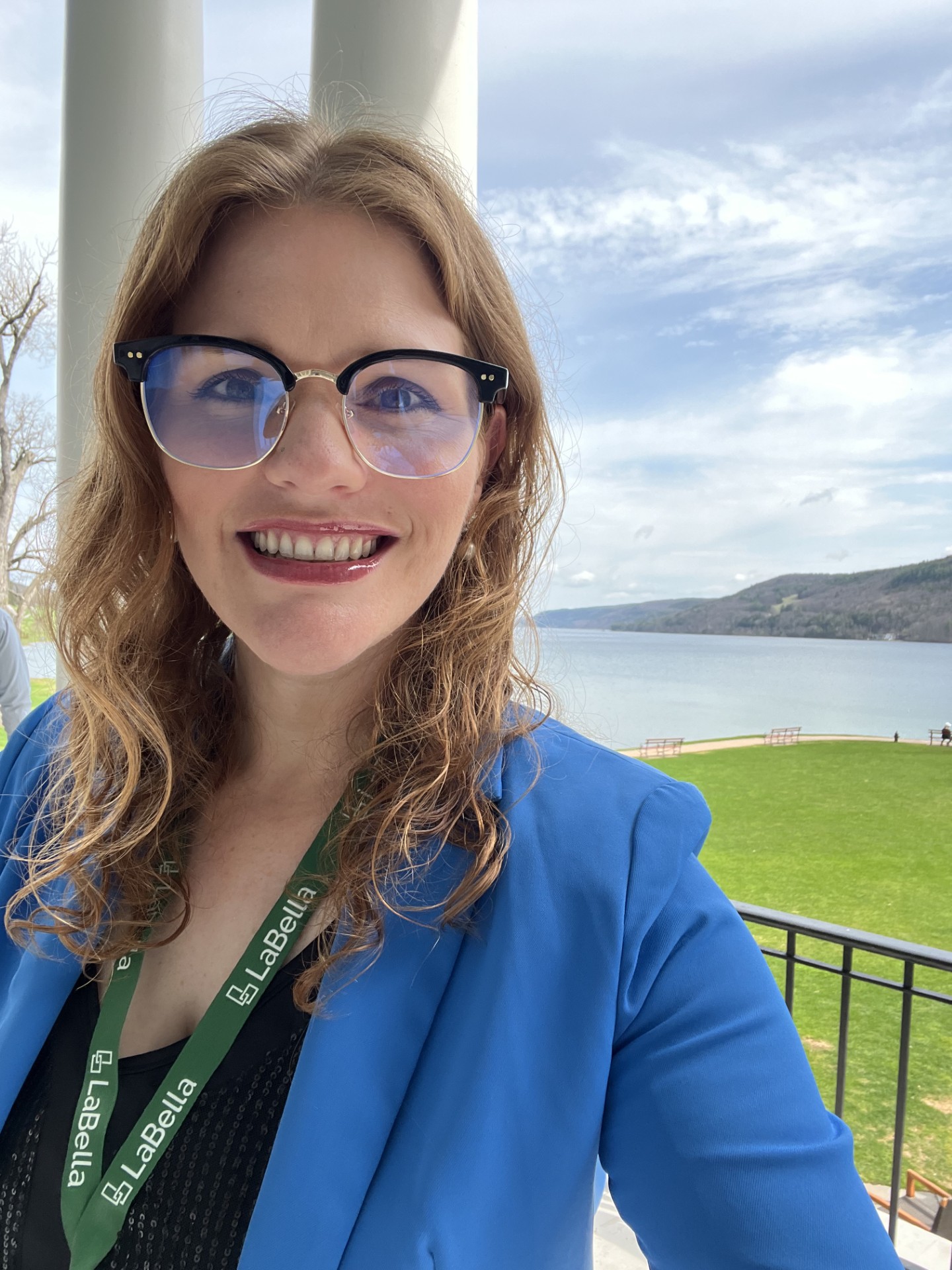
Julie Maresco '12
Julie Maresco graduated from SUNY New Paltz with a BA in Art History in 2012. She later received her MA in Public History and Historic Preservation from Middle Tennessee State University in 2017. She works as a Preservation Analyst for the New York State Historic Preservation Office in Albany. In March of 2026, she worked on a nomination for a historic district located in Slingerlands, which was listed on the National Register of Historic Places over the summer. The Pine Hollow Road Historic District consists of three properties designed by renowned Albany Modernist architect Henry L. Blatner. It represents three different house styles from 1941 to 1947, including the Colonial Revival-style, the Prairie Style, and the Mid-Century Modern style. All three houses, however, were carefully designed to integrate within their larger setting in pine woods typical of the region. For this project, Julie drew on her knowledge of early-mid twentieth century design and architecture, which she first studied in her Early Modern Art course with Dr. Reva Wolf and her Architecture of the Hudson Valley course with Dr. Kerry Dean Carso. Her success as a historic preservationist stems from her love of art history, design, architecture, and preserving the past. She looks forward to many more opportunities to combine her interests of art and history in her work.
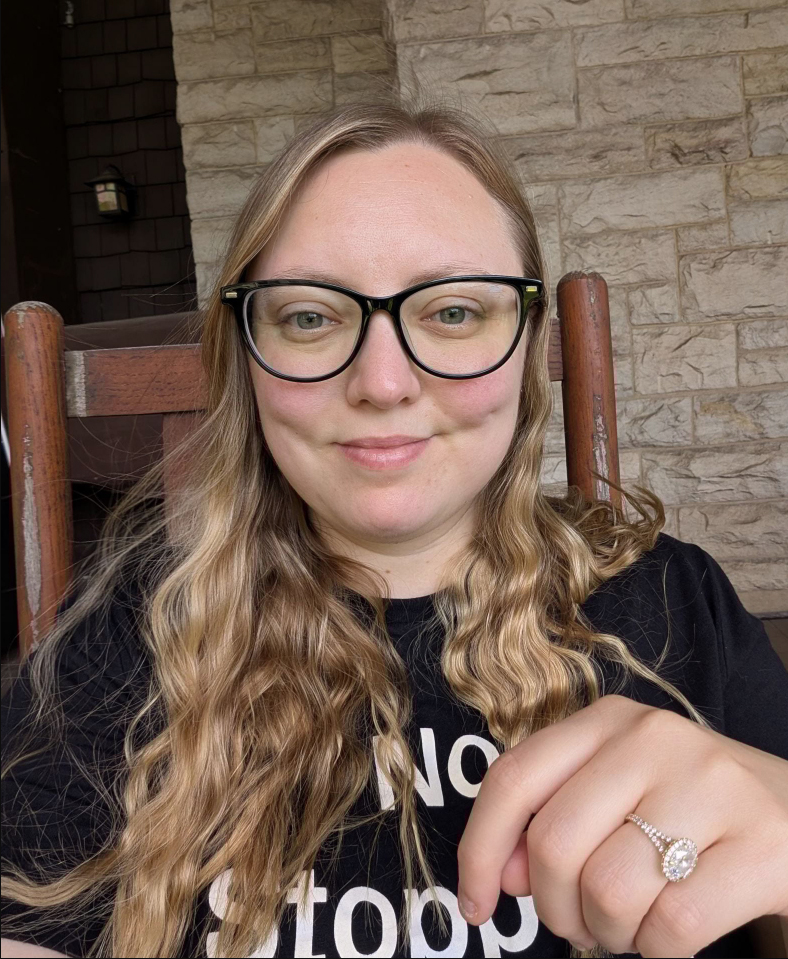
Cheyenne Rossler-Demskie '16
Since graduating in 2016 with her BA in Art History and a Religious Studies minor, Cheyenne Rossler-Demskie has interned and worked at the Center for Photography at Woodstock as a Collections Assistant and interned at The Metropolitan Museum of Art. She then took a break from the field in 2019. In 2022, Cheyenne began her Computer Science degree at SUNY Ulster and in May 2026, graduated with a BS in Computer Science from SUNY New Paltz. In 2025 Cheyenne started an internship with Kingstone Insurance Company and now works full-time as an IT Specialist. Cheyenne, who got married in 2022 and lives in Kingston, reports, "I love the balance between visual art and technology and I'm excited for my new chapter!"
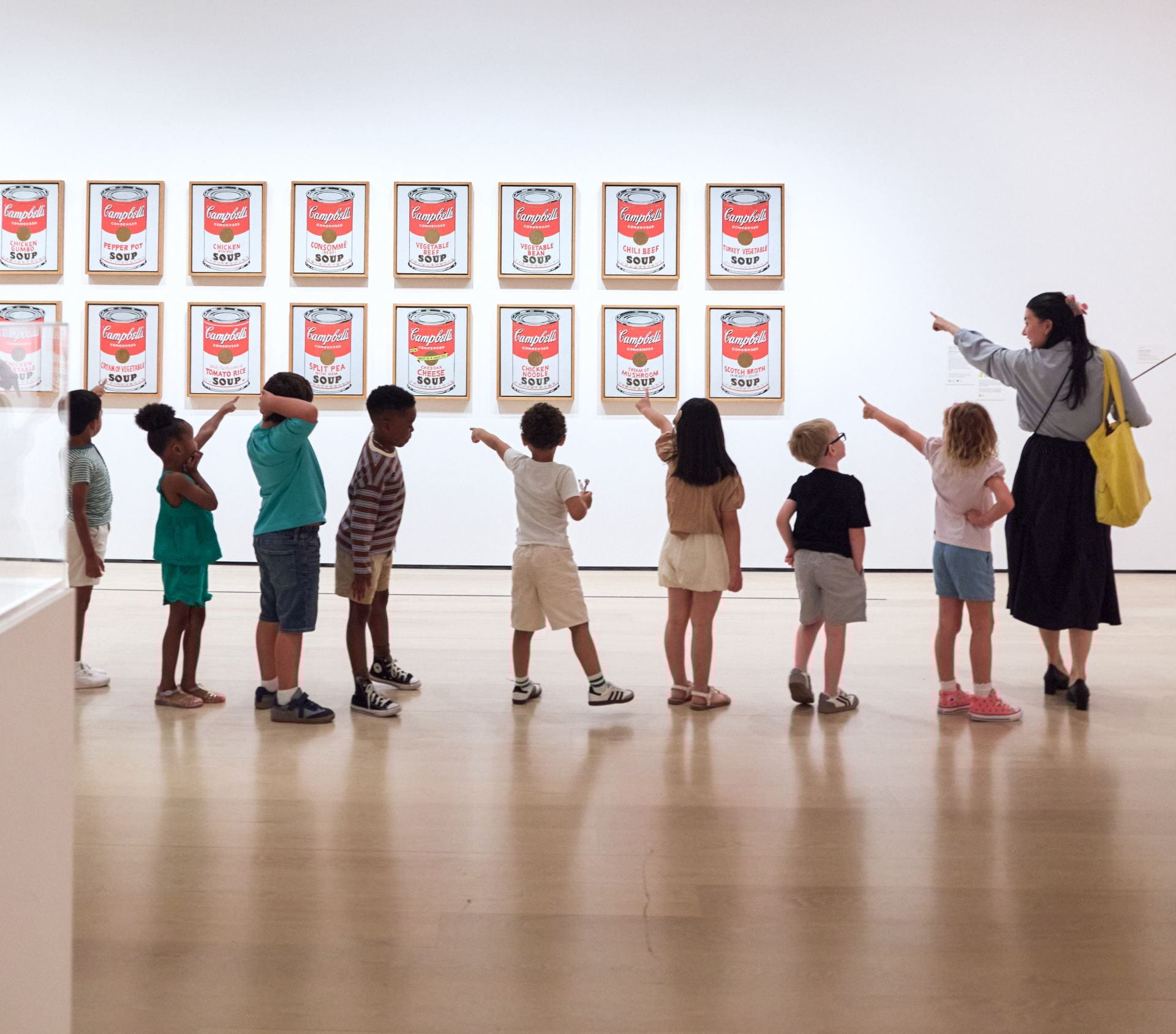
photo: Alycia Kravitz Studio / Museum of Modern Art
Dawn Ruhren '23
Dawn, who earned a BA in Early Childhood Education, with an Art History Concentration, and a minor in Studio Art, has had an exciting year at the Museum of Modern Art! For the past two years, she served as a learning specialist which is a full-time educator and curriculum writer with a goal of reaching 75,000 students by 2027. Over the past year, Dawn developed a 3k–Pre-k curriculum bringing MoMA into the classroom using social-emotional learning, which she tested directly in NYC classrooms before its official launch this fall. In May 2026, she also presented at the New York City Museum Education Roundtable Conference at the American Museum of Natural History.
This fall, Dawn is starting graduate school at Teachers College, Columbia University in education policy, where she will focus on using quantitative and qualitative research to advocate for students and families. To top it all off, Dawn has recently been promoted to Assistant Educator of Family Programs and Initiatives. In this administrative and operational role, she will oversee teaching artists and student assistants, plan large-scale events, foster partnerships, launch a new Saturday Family Initiative, and more. She looks forward to growing in this new role, and directly applying her graduate studies to MoMA.
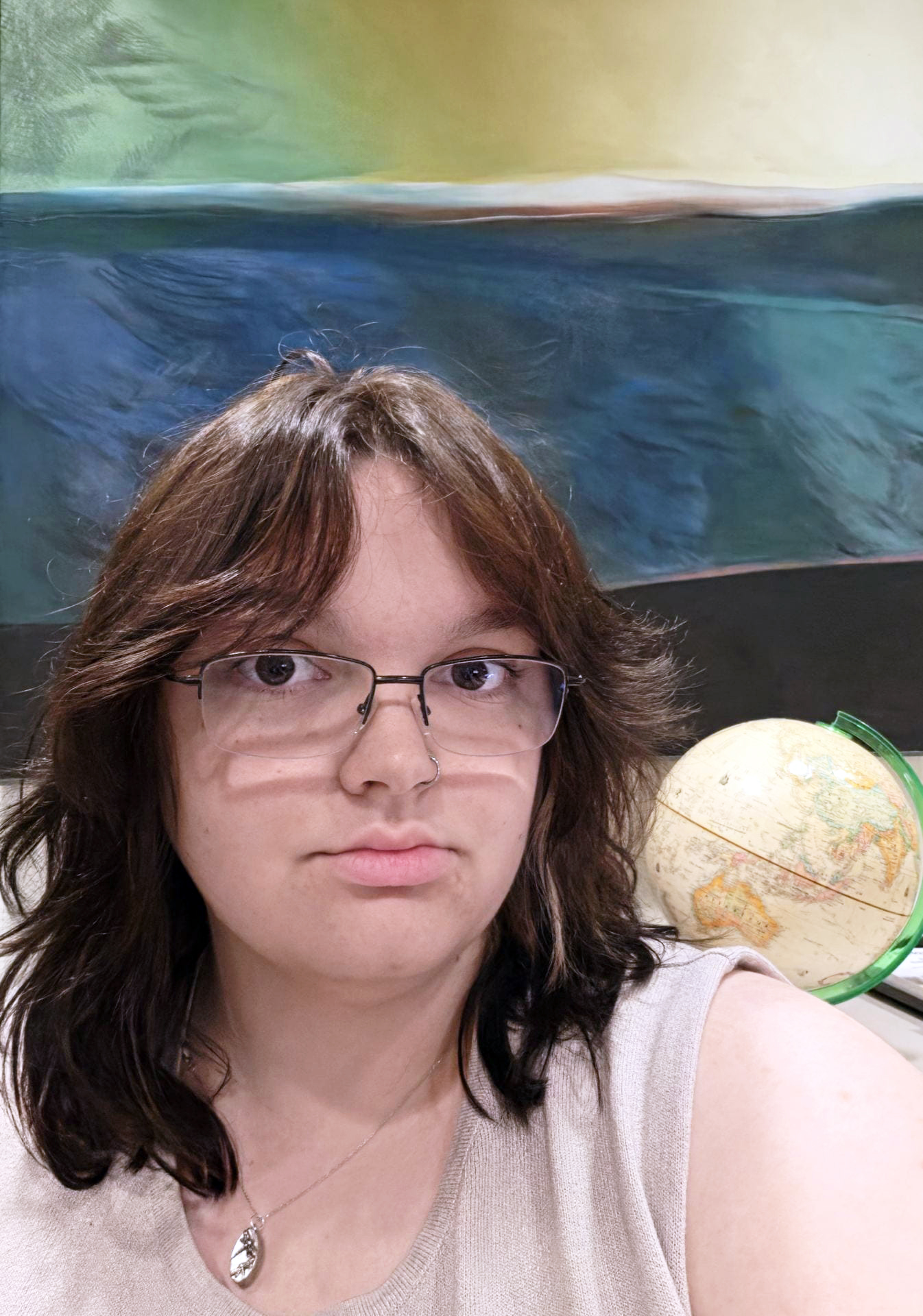
Jocelyn Thornton '24
Jocelyn, who graduated in December 2024 with a BA in Art History, has been accepted into the Syracuse University iSchool (Information School) for a Master of Science in Library and Information Sciences for Fall 2026. She will be enrolled in the online program as a part-time student while also working full-time at Syracuse University in the Political Science department. Jocelyn plans to follow the "Organization and Management of Information and Knowledge" professional pathway in the MSLIS program and aims to work in archives post-grad!
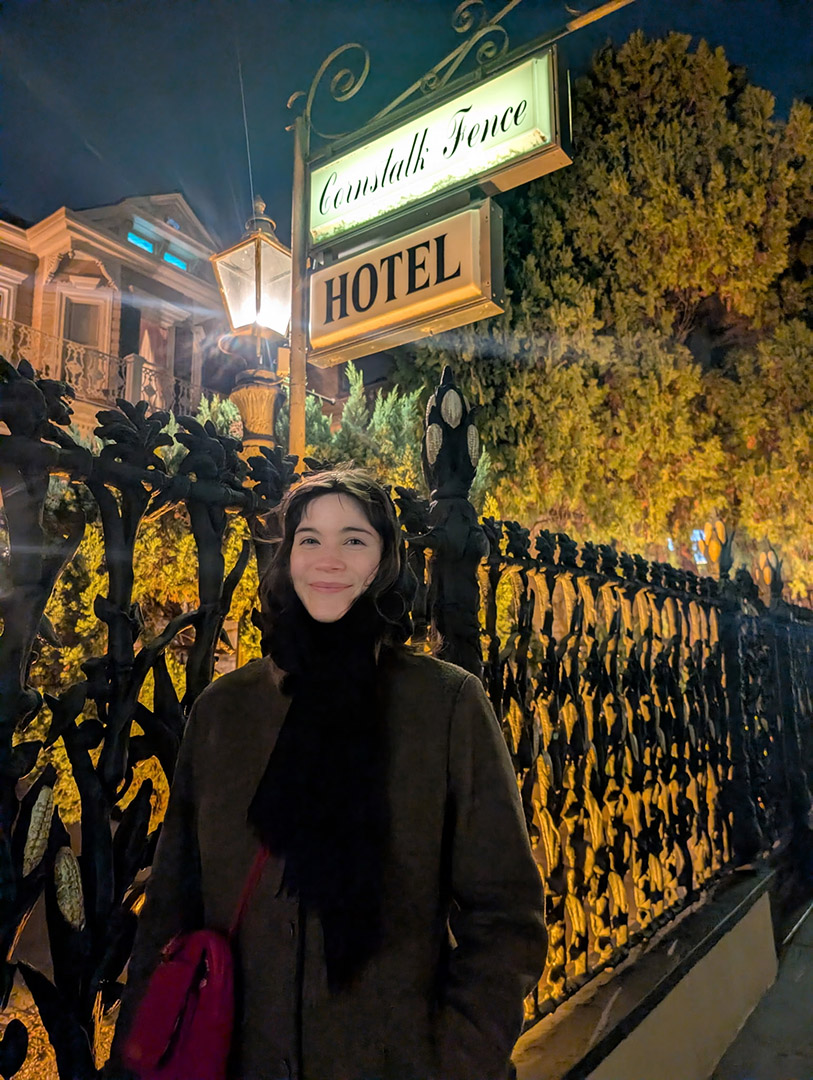
Beth Wynne '19
Beth Wynne, who graduated SUNY New Paltz with a BA in English with a concentration in creative writing and minors in Art History and Studio Art, is the Education Coordinator at the Thomas Cole National Historic Site in Catskill, New York, where she designs hands-on activities and educational programs for all ages. In addition to overseeing art history lectures, exhibiting artist events, school visits, monthly workshops, and community programs, she coordinates the museum's day-to-day visitor operations and volunteer staff. This summer, Beth developed the site's first-ever children's art camp. She had previously served as the site's School & Youth Outreach Coordinator and was a Cole Research Fellow, producing research on the historic property's labor and enslavement histories.
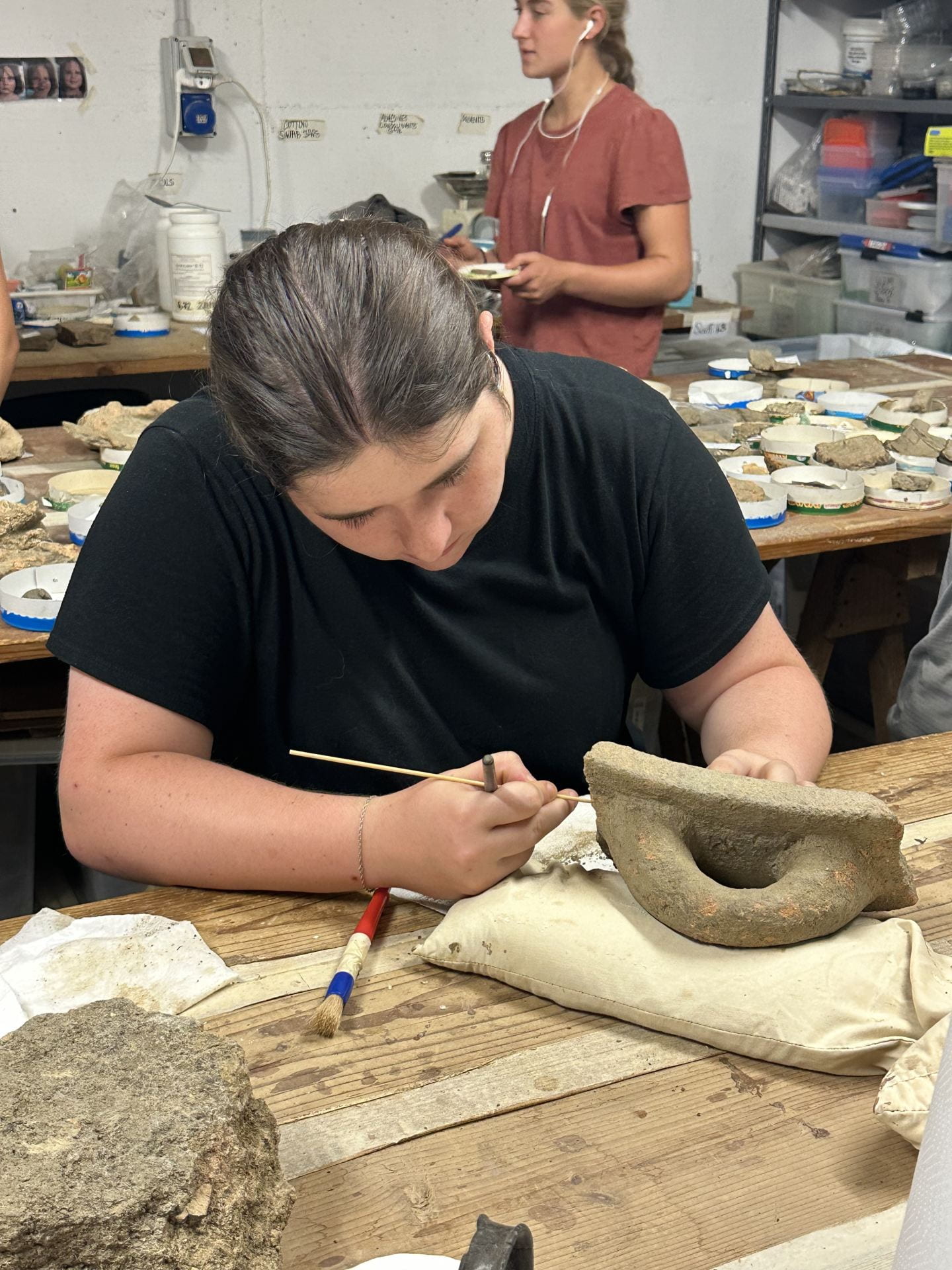
Isabella Barcher
Isabella Barcher is a senior pursuing two degrees: one in the BFA program for Painting and Drawing and the other a BA in Art History.
This past summer, she received the Alison Wilhelmy '09 Memorial Scholarship, which allowed her to begin training in archaeological fieldwork and conservation at the Poggio Civitate Archaeological Project in Murlo, Italy. At the same time, she was awarded a SURE Grant and collaborated with Professor Keely Heuer on an independent research project. This project involved traveling to Sicily, specifically to Palermo, Catania, and Syracuse, where she focused on ancient Southern Italian polychrome pottery.
Isabella will present her findings this fall in a presentation titled "Pigments of the Past: The Iconography of Polychrome Vases in Ancient Southern Italy and Sicily." She hopes to expand this work into her thesis projects, which will focus on pigment research, creation, and application, as part of her BFA gallery show and her honors thesis.
Isabella plans to graduate in Spring 2027 and aims to pursue a master’s degree in painting conservation, further developing both her studio practice and her passion for art history.
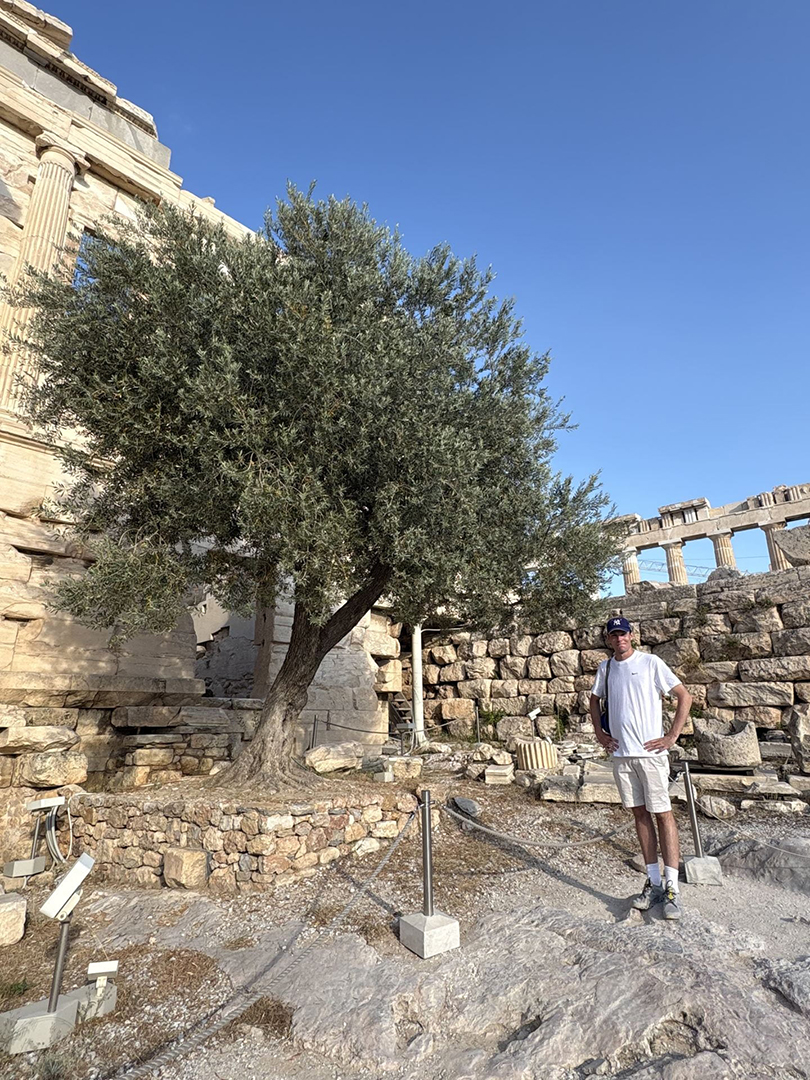
Tim Lacy
Tim Lacy, a senior majoring in Art History, spent Summer 2026 interning at the Fenimore Art Museum in Cooperstown, New York. He worked for the collections manager updating the photos in the inventory catalog for a wide range of powder horns, powder flasks, army canteens, and walking sticks from nineteenth-century America.
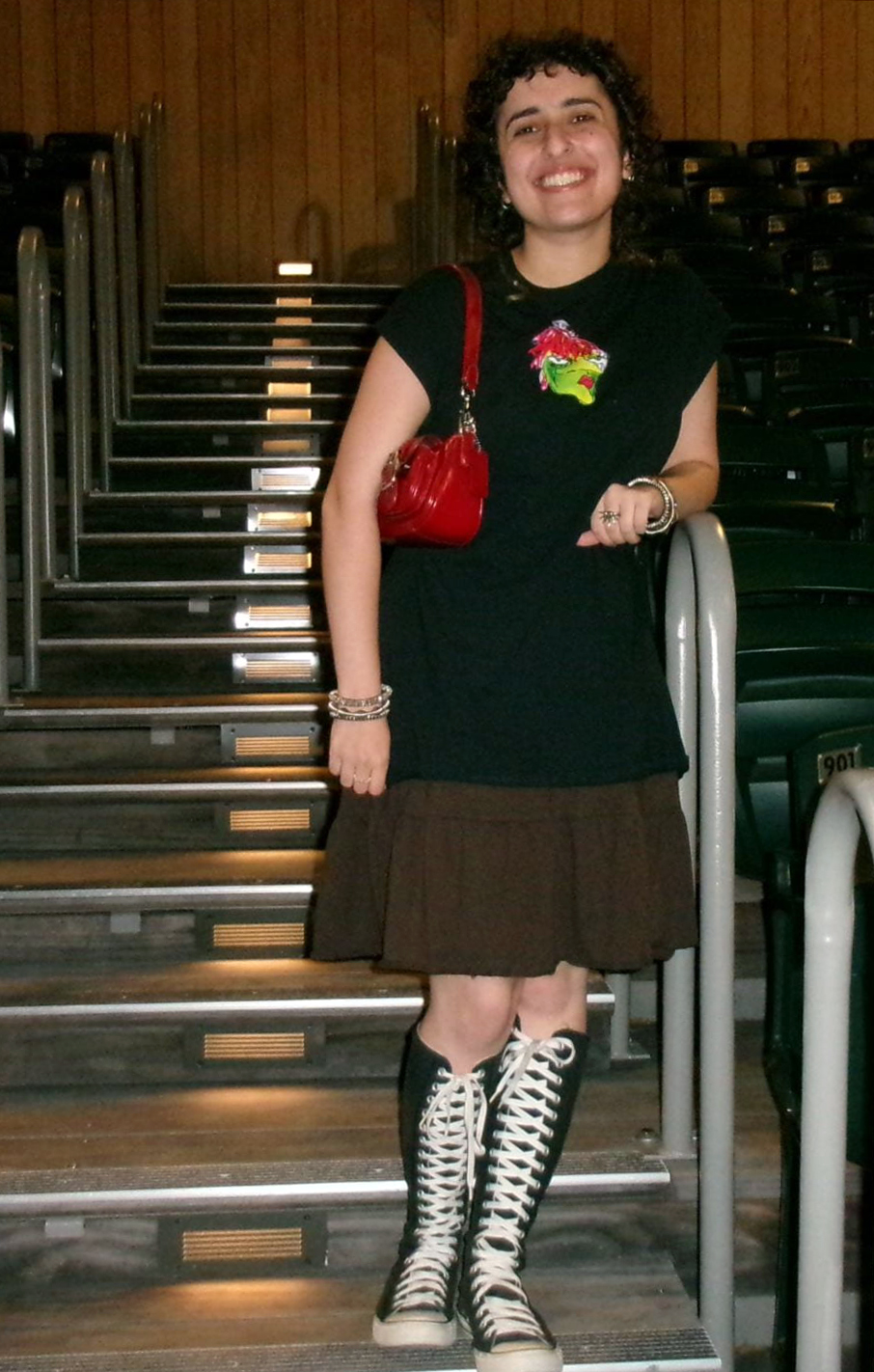
Nina Zar
Nina Zar is a rising Junior at SUNY New Paltz, double majoring in Art History and Anthropology with a minor in Jewish Studies.
They have participated in a number of art history-related campus projects, such as a Fall 2025 Museum Project Seminar taught by Professor Wolf working on the Dorsky Museum’s exhibition, In Our Time: R. B. Kitaj and Books. Through this seminar, they assisted in the development of the exhibition, and published an essay titled “Kitaj and Appropriation: Reclamation Reimagined” in the exhibition catalog. During the Spring 2026 semester, they were on the selection committee and moderated sessions for the 2026 SUNY New Paltz Undergraduate Art History Symposium. They also participated in the 2026 rendition of The Convivium, where they served in the decor committee and designed a recipe book zine containing the dishes included in the banquet that was sold in order to fundraise.
In clubs on campus, Nina serves as the President of the Zine Collective, Vice President of the Little Old Ladies Club, and Vice President/Mizrahi Chair of the Jewish Student Union.
This upcoming school year, Nina looks forward to interning with the New Paltz Zine Library in the Sojourner Truth Library under the supervision of Zine Librarian Madeline Veitch. Hoping to pursue museum work in the future, they are thrilled to gain background on different aspects of cataloging/archiving, as well as experience working on community outreach projects.
.jpg)
Monaldi: A Tale by Washington Allston, University of Wales Press, 2026
Kerry Dean Carso
Professor Carso’s new edition of Washington Allston’s Gothic novel Monaldi: A Tale (1841) has been published by the University of Wales Press. A nineteenth-century American painter and writer, Allston bridges the worlds of art and literature in this book. Full of Gothic intrigue and suspense, Allston’s novel tells the story of a renowned and idealistic Italian artist named Monaldi who descends into madness and despair after falling prey to the machinations of his evil poet-friend Maldura and a bandit named Fialto. Professor Carso’s introduction to this new edition of Monaldi addresses the Gothic literary qualities of the novel: the frame narrative, the Italian setting (which features a cavern, a monastery, and banditti), sexual transgression, attempted murder, and the Romantic landscape. In his time, Allston achieved fame as a Grand Manner history painter in both Great Britain and the United States, but his novel has received less attention from scholars than his paintings. This new edition draws attention to this semi-forgotten work in the transatlantic Gothic canon. Monaldi was published in the University of Wales Press’s “Gothic Originals” series of annotated editions, with new introductions, of forgotten Gothic novels. Available in the UK in June 2026, the book will be available in the United States in October 2026. Professor Carso’s new edition of Monaldi builds on her previous scholarship; she included a chapter on Allston’s Gothic paintings in her award-winning first book, American Gothic Art and Architecture in the Age of Romantic Literature (University of Wales Press, 2014).
Because of her expertise on the nineteenth-century American architect Alexander Jackson Davis, the National Trust for Historic Preservation invited Professor Carso to contribute an essay to the exhibition catalog Alexander Jackson Davis: Designer of Dreams (Tarrytown, NY: National Trust for Historic Preservation, 2025). The title of the essay is “Alexander Jackson Davis and the Literary Context of the Gothic Revival.” Professor Carso also gave a talk at a symposium on architect Davis at Lyndhurst in Tarrytown on June 22, 2025.
Professor Carso participated on a panel, “Follies in the Garden: Ornament, Narrative, and Architectural Delight,” at the Institute of Classical Architecture and Art in New York City on April 29, 2026. The panel was inspired by her book Follies in America: A History of Garden and Park Architecture (Cornell University Press, 2021).
Professor Carso moderated a panel, “Sanctified: Preservation Strategies Across New York State,” at the New York History Conference at Marist University in Poughkeepsie on June 12, 2026. She gave an invited lecture, “A History of Architecture in the Hudson Valley,” at the National Town Builders Association Roundtable, at the Locust Grove Estate in Poughkeepsie on May 1, 2025, and she lectures regularly on the Hudson River School at Mohonk Mountain House.
Professor Carso was awarded a Research and Creative Projects Award from the Provost’s Office in 2025 to research in the archives of the Avery Architectural and Fine Arts Library at Columbia University. She spent several days looking at the “Alexander Jackson Davis Architectural Drawings and Papers, 1804-1900” and “Nathalie Bailey Morris Photographs of American Gothic Revival Architecture, 1853-1937” for a book project tentatively titled The Afterlife of American Victorian Architecture in the Early Twentieth Century.
Professor Carso was interviewed about the Gothic Revival for the magazine Dwell for an article “‘Castlecore’ Has Come Back Before. So What’s Driving the Latest Renaissance?” by Kelly Faircloth, published on Feb. 28, 2025.
In recent semesters, Professor Carso has supervised several internships at Historic Huguenot Street and has served as an External Advisor for a candidate in the MFA Program. She enjoys taking students to Historic Huguenot Street and the Dorsky Museum.
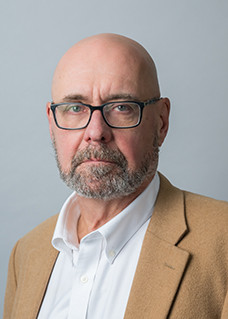
Terence (Ted) Bertrand Dewsnap
Aside from teaching, Professor Dewsnap has given most of his recent academic efforts to a continuing study of Lincoln Cathedral in England. His article, "The Plan of Romanesque Lincoln Cathedral: Principles of Design, Geometry, and Metrology," was just published in Gothic Space: Studies in Celebration of Stephen Murray (MIT Press, 2026), ed. Katherine M. Boivin, Lindsay S. Cook, and Zachary Stewart. A second article entitled “Lincoln Cathedral in the Twelfth Century and the Image of Reform” will appear later this summer in the Marburger Jahrbuch für Kunstwissenschaft. In this essay, Ted describes efforts to correct the strongly monarchic emphasis of the Conquest-era cathedral in response to the greatly changed ecclesio/political climate of the following century through architectural modifications and the insertion of a frieze of Biblical sculptures into the façade.
In February, Ted had the pleasure of presenting research to New Paltz students in a session of the Art History in Action series, “Aboveground Archaeology at Lincoln Cathedral.” Ted spent spring break in England climbing about in Lincoln Cathedral and collecting data also at a small church nearby in the town of Stow (or Stow-in-Lindsey) rebuilt by some of the same masons who worked on the cathedral. The study he is developing focuses on the identifying marks that the masons left on the stones they carved. Generally, masons’ marks in the twelfth and thirteenth century are simple geometric designs such as crosses and stars, sometimes numerals or letters, an accounting system that assisted in payments to the masons. One mark at Lincoln (appearing also at Stow) is extraordinary. It represents a bow harp, so suggesting more complex associations. It is perhaps the mark of the master mason. It is not a tag, but a signature, an indication of personal identity. Perhaps it refers to the mason’s knowledge of theology (David, the harpist of the Bible), or Pythagoras, whose study of music and geometry has alignments with architectural design. Whatever the precise meaning, the mark indicates a degree of pride and education that accompanies the increasing status of the architect/mason/sculptor in the twelfth century.
Keely Heuer
Over the past eighteen months, Professor Keely Heuer was honored to be elected as an associate member of the North America branch of the Istituto Nazionale di Studi Etruschi ed Italici, the world’s foremost professional organization for the study of pre-Roman Italy. She continues to serve as co-chair of the Archaeological Institute of America’s Etruscan Interest Group, for which she coordinated five online talks for its members featuring cutting-edge research from major archaeological excavations and spotlighting the work of up-and-coming scholars in the field. She also enjoyed engaging with her fellow pre-Roman Italy colleagues as an invited discussant at the Larissa Bonfante Workshop on Etruscan and Italic Arts this past fall, focused on the visual culture of ancient Apulia.
She has continued traveling around the ancient Mediterranean (her favorite activity!), including an extensive exploration of central and northern Greece in June/July 2025 and a month-long tour of Egypt, supported by a Research and Creative Projects Award, in January 2026. This summer, she had the great opportunity to take eighteen SUNY New Paltz students and recent alumni to Greece for a month, teaching them at archaeological sites and museums across the country.
Last year, she had an essay published on the depictions and use of situlae (wine buckets) on painted vases produced in southern Italy and Sicily as evidence of the worship of Dionysos, the Greek god of wine, in indigenous communities of the region. The paper appeared as part of a volume written in in honor of Dr. Ian McPhee, a leading figure in the field of South Italian vase-painting and a long-time director of the Trendall Research Centre at La Trobe University in Melbourne. She also contributed to the newly published catalogue of ancient Greek, Italian, and Roman art in the North Carolina Museum of Art, writing roughly thirty entries on terracotta vases and figurines.
Professor Heuer has also treasured the opportunities she has had over the past year and a half to engage with SUNY New Paltz Alumni, such as hosting an interactive activity for Alumni Reunion Weekend that focused on hairstyles and cosmetics in ancient Greece and Rome with participants taking home perfumed olive oil and hand cream favored by Roman matrons. She also had the delightful experience of taking a group of students to meet Art History alumna, Ameya Grant, for a behind-the-scenes tour of the Object Conservation Labs at the Metropolitan Museum of Art. Professor Heuer was chosen to receive the Friend of the Alumni Association Award in 2025.
In Fall 2025, she taught a new Honors seminar titled “Textiles, Dress, and Identity in Ancient Greece and Italy,” for which she received a 2025 Teaching Innovation Award. As part of the course, the students learned how to spin wool with drop spindles, dye their thread with natural dyes favored in the ancient Mediterranean like saffron and woad, and weave on a warp-weighted loom – identical to that which would have been used in Classical antiquity – constructed by Gillian Henderson, an Art Education major at SUNY New Paltz. Professor Heuer spoke about what she learned from this unique experience at the Faculty Research Symposium in December 2025. That same month, students in her Art of Ancient Rome course hosted the “Forum Festival,” during which they shared the results of their research projects, either as poster presentations or table displays. Students in the course explored a wide range of topics from the iconography of Etruscan bronze mirrors to attempting to recreate ancient Roman cement and replicating Romano-Egyptian painted burial shrouds. Beyond her regular classes, Professor Heuer had the pleasure of mentoring Jazmyne Daily-Simpson and Lucia Sprague in their Honors Theses and Isabella Barcher’s Summer Undergraduate Research Experience project, “Pigments of the Past: The Iconography of Polychrome Vases in Ancient Southern Italy and Sicily.”
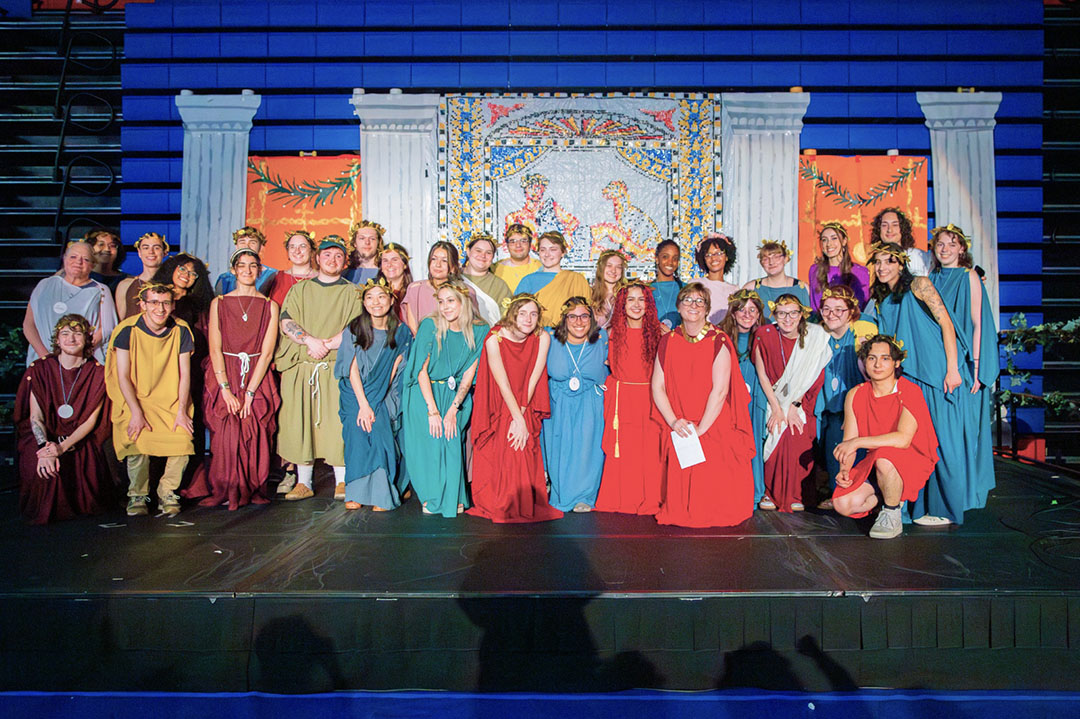
One of the great recent highlights of Professor Heuer’s career has been the creation of The Convivium, an immersive, large-scale banquet inspired by a different ancient Mediterranean civilization held each May. This event is organized and run by the students in a course of the same name, and they host around 500 students, faculty, alumni, staff, and community members in the Hawk Center and give a multi-course feast produced entirely using techniques and ingredients available in the ancient Mediterranean (i.e., no electricity allowed!). The students also collaborate with their classmates in the Music and Theatre departments to provide the evening’s entertainment, such as an original musical about Theseus and the Minotaur by Music major Liz Distefano this past May, as well as with Visual Art students to create authentic replica pottery and décor to transform the dining space from a Roman villa in 2025 to a Bronze Age Minoan palace in 2026. The first Convivium was generously sponsored by a grant from the Creating a Stronger New Paltz Together Fund from the Provost’s Office with additional funding from the Office of the Dean of Fine and Performing Arts. Professor Heuer invites you to contribute to the Convivium Program Fund, ensuring that this event continues to thrive, building community and providing students with extraordinary opportunities to develop creativity, leadership, and problem-solving skills. We hope you will join us for next year’s adventure in ancient Egypt on May 2, 2027!
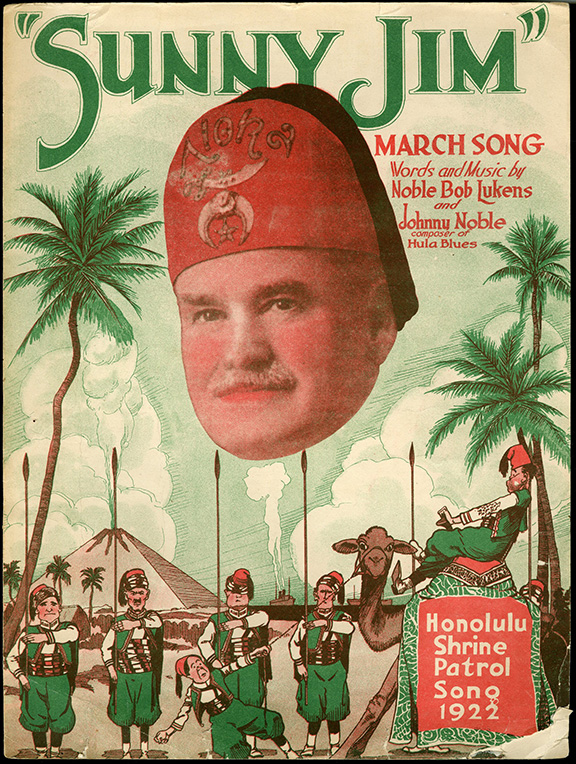
“Sunny Jim” March Song, Words and music by Noble Bob Lukens and Johnny Noble, Chicago: Rayner, Dalheim & Co., 1922 (New York: Private collection)
Jaclynne Kerner
In 2025 and 2026, Dr. Jaclynne Kerner taught Early Medieval Art, Later Medieval Art: Gothic, Images and Ideas in World Art, Art of the Western World 1, Encounters with Islam: Art and Appropriation, 9th-19th Centuries, and Sacred Spaces, Divine Images. Dr. Kerner’s classes cover multiple global traditions, and she is thrilled that the department is taking steps to decenter, broaden, and strengthen the New Paltz art history curriculum. As the chair of the department’s two recent faculty searches, she is delighted to have Drs. Elizabeth Lee and Dani Ezor as new colleagues.
Dr. Kerner continues to work on a two-volume study of the material culture of the Ancient Arabic Order of Nobles of the Mystic Shrine, the appendant body to Freemasonry whose fez-wearing members are commonly known as Shriners. Her research sheds light on the fraternity’s extensive but understudied material legacy, which is rife with appropriations from Islamic and ancient Egyptian history. Her article, “Alterity and Antiquarianism in the Illustrated Sheet Music of the Shriners,” was published in February 2025 as a chapter of Illustrated Sheet Music in the U.S., 1830–1930 (part of Bloomsbury’s Research in Illustration series), edited by Theresa Leininger-Miller and Kenneth Hartvigsen. Dr. Kerner’s contribution to the pioneering anthology considers illustrated Shriner sheet music as exponents of the fraternity’s pervasively Orientalized worldview during American fraternalism’s “Golden Age” (c. 1870–1930).
In 2025, Dr. Kerner traveled to Los Angeles to present a paper at the 13th International Conference on Freemasonry. The theme of the conference, which was sponsored by the Grand Lodge of California, was Freemasonry in Popular Culture: 1700 to Yesterday. Dr. Kerner’s paper explored the sensory and material dimensions of the Shriners’ 50th Imperial Council Session (convention). San Francisco’s Islam Temple (presently, Asiya Shriners), the host body of the multi-day festivities of June 1922, spared no expense in planning the fraternity’s “Golden Jubilee” convention. The event followed in the wake of an inflection point in Shriner history. Over the preceding five decades, the Shrine had earned a seemingly unshakable reputation as a boozy, Middle Eastern-themed social and travel club for fun-loving men—Freemasonry’s freewheeling “playground.” With Prohibition’s enactment in 1920, the Shrine’s focus shifted, at least publicly, from the purely (and often intoxicatingly) recreational to the philanthropic. The first in the eventual network of Shriners’ charitable children’s hospitals—the brainchildren of the 1920 and 1921 conventions—opened in September 1922. The fifth such institution’s cornerstone was laid in San Francisco during the “Golden Jubilee” convention. Bringing together a corpus of archival photographs, souvenirs, and ephemera from the 1922 convention and subsequent “pilgrimages” to Hawai’i and Alaska, Dr. Kerner’s paper considered the complex relationships between images, artifacts, fraternal identity, and the Shrine’s role in the Orientalization of American popular culture. Such images and objects—badges, ribbons, paperweights, flashlights, programs, postcards, sheet music, menu cards, etc.—evince the inherent materiality of Shrinedom, the consumerism of the “Roaring Twenties,” the impact or negligence of Prohibition, souvenir-collecting fads, advancements in travel technologies, and the election of a Shriner (Warren G. Harding) to the United States’ highest political office. They also concretize the fezzed fraternalists’ countless appropriations from Arab-Islamic culture. Press photos and newspaper coverage helped contextualize the Shrine’s engenderment of a highly commodified fraternal atmosphere and its increasingly altruistic turn in the 20th century’s third decade. Dr. Kerner also gave two illustrated lectures on Shriner material culture on campus; one was the inaugural lecture in the Art History in Action series, and the other was part of the first Faculty Research Symposium.
Dr. Kerner encourages current Art History students to explore scholarship opportunities by visiting Scholarships | SUNY New Paltz and invites alumni to consider contributing to the Alison Wilhelmy '09 Memorial Art History Scholarship. Established by Professor Emeritus Ed Lundergan and Carol Lundergan in 2020 in memory of Alison Wilhelmy ’09, this annual scholarship supports non-tuition expenses related to traveling overseas for academic purposes for SUNY New Paltz Art History students studying abroad. To contribute to the fund, visit www.newpaltz.edu/give/ways.html.
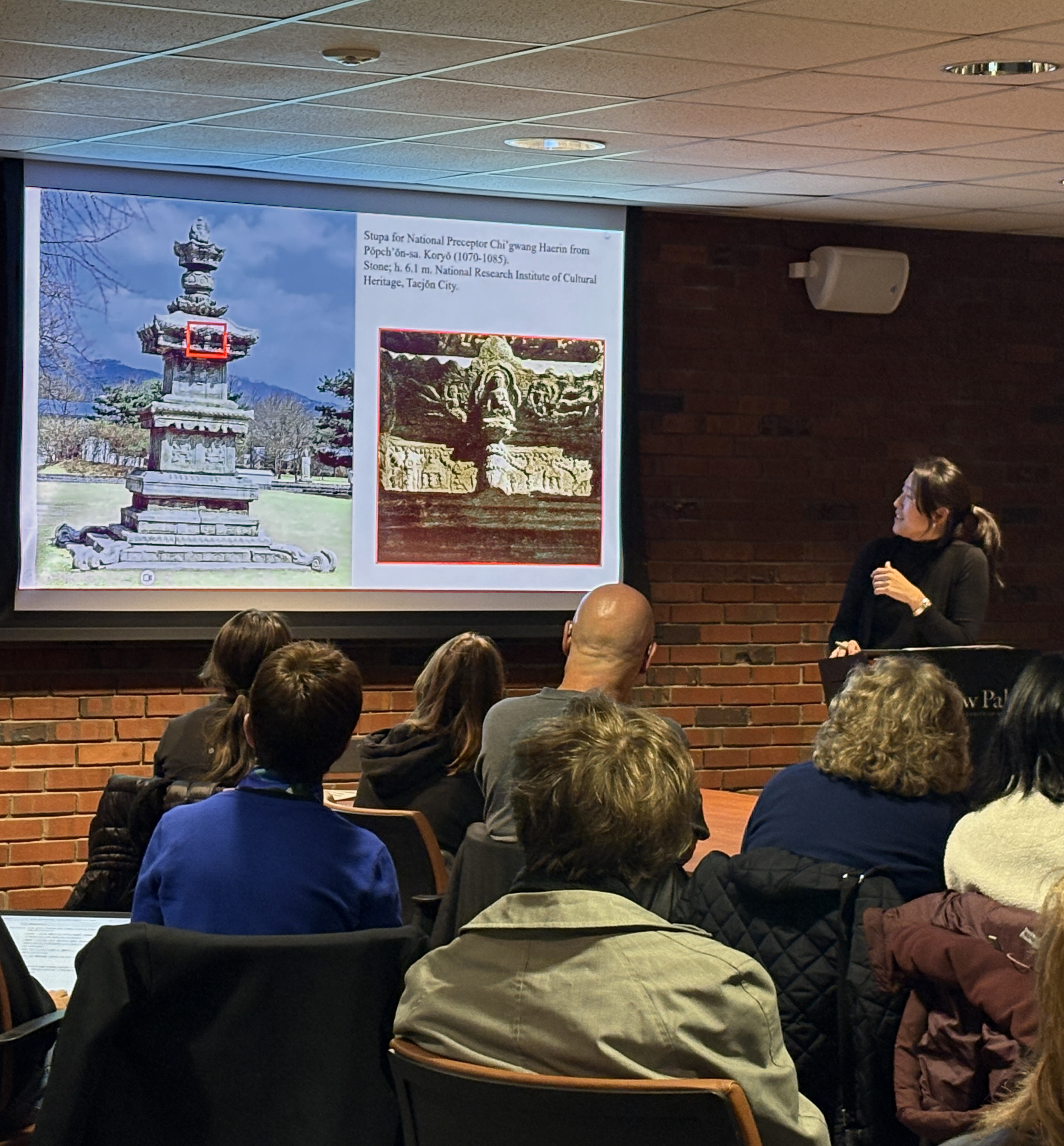
Dr. Lee presenting in our Art History in Action series of talks by faculty about their research.
Elizabeth Lee
Professor Elizabeth Lee presented her work on Buddhist sculptures, travel, and temples during the Koryŏ Dynasty (918-1392 CE) at the Digital Humanities and Social Sciences Korea Conference hosted by the James Joo-Jin Kim Center for Korean Studies at the University of Pennsylvania in April 2025. She also presented a paper on Unified Silla (668-935 CE) Buddhist sculptures in Tokyo at the Asian Studies Conference Japan that summer.
Dr. Lee also organized an interdisciplinary panel for the 2026 Association for Asian Studies (AAS) conference that focused on different ways in which the environment can function as a mediating device in art, poetry, and mass media in East Asia. There she delivered a paper on how the geology of the Namhan River influenced the creation of iron Buddhist sculpture during the early Koryŏ period.
Locally, Dr. Lee shared her work on Riverine Buddhism and iron Buddhist sculpture with the SUNY New Paltz student body and faculty at an Art History in Action event and through the Faculty Research Symposium hosted by the Faculty Development Center.
During the 2025-26 academic year, Dr. Lee participated in a SUNY-wide initiative exploring the idea of critical AI literacy and how faculty can support student understanding of the ubiquitous technology. Through this program, Dr. Lee learned from members of other SUNY campuses about how they are approaching AI in their classrooms and contributed an art history-focused assignment engaging with AI’s limits and uses to the SUNY AI Community for Educators database of AI-related resources.
In personal news, Dr. Lee and her family welcomed their newest member at the end of the spring semester. She will be on parental leave during Fall 2026.
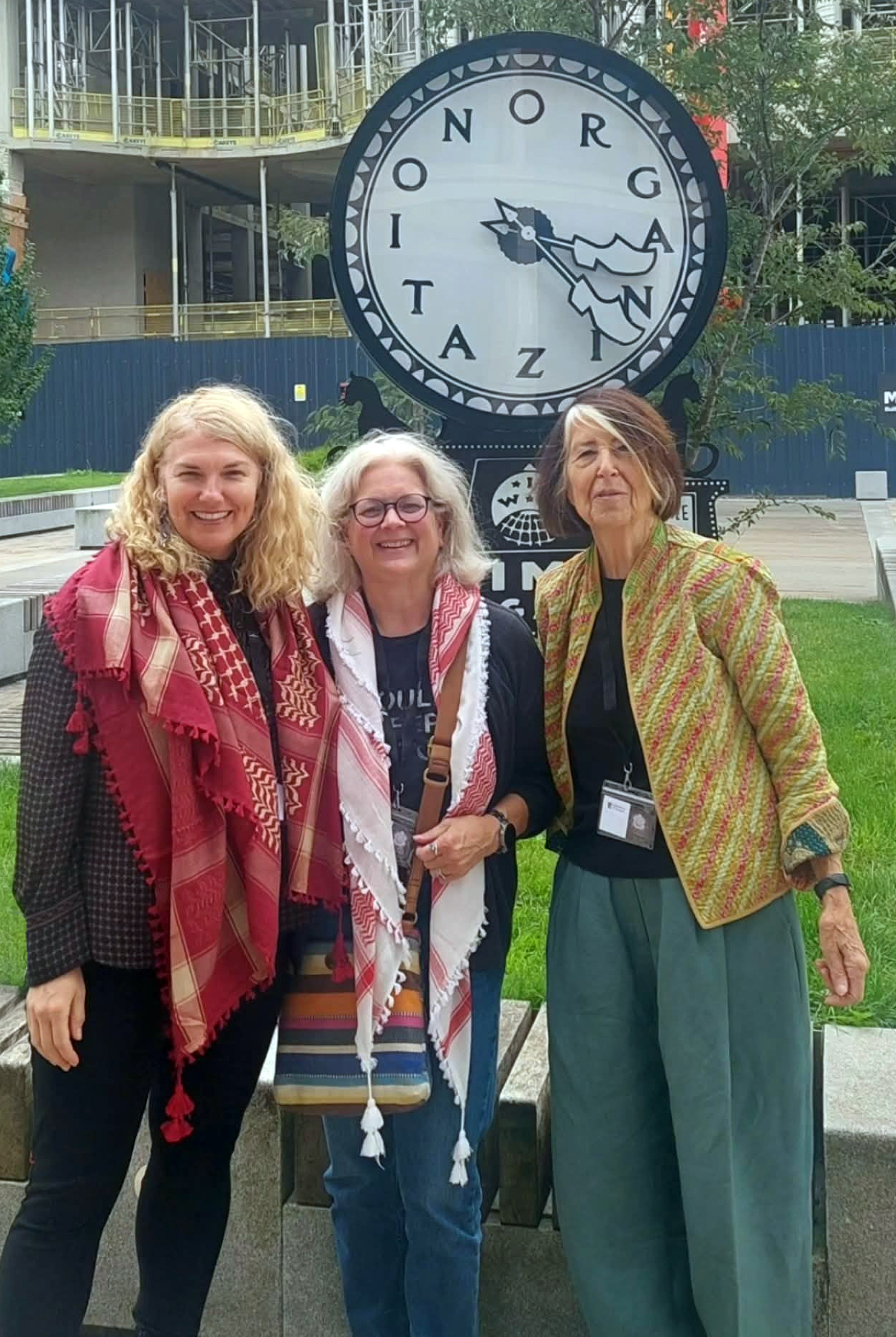
Abigail Susik, Beth E. Wilson, and Dawn Ades at Surrealismes 2026 in Glasgow.
Beth E. Wilson
In Spring 2026, Beth E. Wilson (Lecturer) presented her research on Man Ray's Solarization photographic process for the Art History in Action lecture series. "Solarization: The Primacy of Photography over Thought" resulted in lively discussion among Wilson, the students and our colleagues. In Summer 2026, Wilson presented at the Surrealisms 2026 conference of the International Society for the Study of Surrealism (ISSS) in Glasgow, Scotland. Her paper, "Lee Miller: Bassesse and The Wonder and Horror of Surrealist Photography," focused on the influence of dissident Surrealist thinker Georges Bataille throughout the career of photographer Lee Miller.
After over 30 years serving SUNY New Paltz as trusted colleague, teacher, mentor, and UUP Chapter President, Beth Wilson retired in May. She is teaching one last class on—what else?— Surrealism in Fall 2026. In January 2027 she will move to Marseilles, France. Au revoir, Beth!
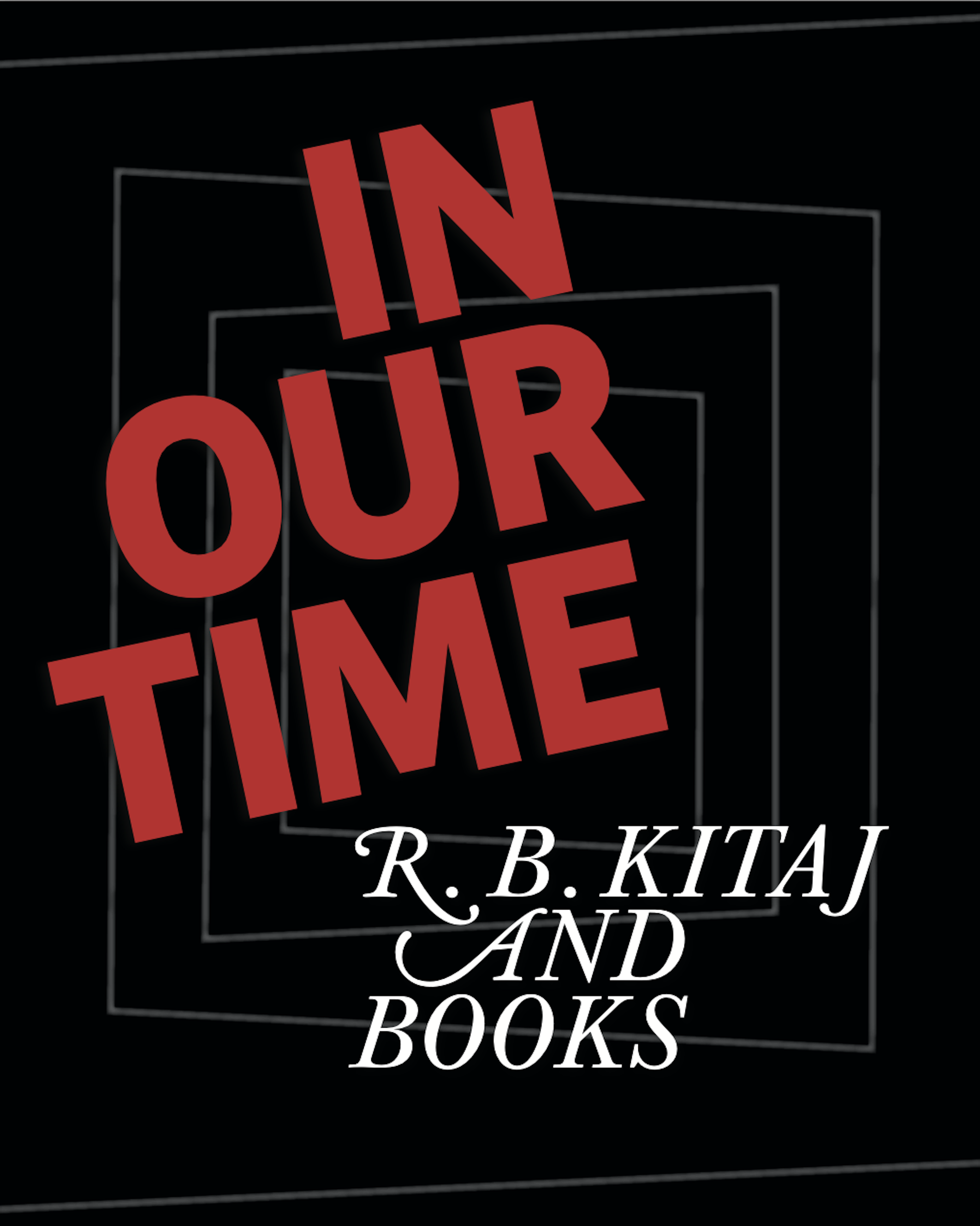
Exhibition catalog edited by Reva Wolf, In Our Time: R. B. Kitaj and Books (Samuel Dorsky Museum of Art, in association with SUNY Press, 2026)
Reva Wolf
A highlight of Reva Wolf’s recent activities was to curate the exhibition In Our Time: R. B. Kitaj and Books, on view through November 8, 2026 at the Samuel Dorsky Museum of Art at SUNY New Paltz. The exhibition features a portfolio of fifty silkscreen prints by Kitaj, created in 1969-70, each picturing a book cover, dust jacket, or other publication detail. The prints, with their wide range of subjects and associative potency, evoke influential cultural and political developments of the twentieth century. Their power as a reflection on our own time is underscored through a coda to the exhibition, contemporary artist Daria Irincheeva’s Forced Omission, a series of over 200 paintings of books by authors persecuted in the Soviet Union during the mid twentieth-century. A catalog edited by Professor Wolf and distributed by SUNY Press (available through this link) accompanies the exhibition and contains essays by nine students, two colleagues, and Irincheeva, along with Wolf’s essay, “Books as Witnesses and Portents in R. B. Kitaj’s In Our Time.” The exhibition and student essays were developed in the Fall 2025 seminar, Printmaking, Books, and R. B. Kitaj, in which students made exciting discoveries about Kitaj’s prints. Professor Wolf received a Teaching Innovation Award from the Faculty Development Center to acquire some of the publications that Kitaj used as models for his prints, for study purposes and to include in the exhibition. Also in connection with this project, in October 2025 she gave an invited talk on Zoom, “History, Books, and Identity in R. B. Kitaj’s 1969-70 In Our Time Print Series,” as part of the annual Resnick Institute for the Study of Modern Jewish Life Lecture Series. The exhibition is featured in the online art journal Hyperallergic’s “10 Art Shows to See in Upstate New York This September.”
In Spring 2026, Professor Wolf’s article “Diplomats as Early Collectors of Goya: Guillemardet, Wellington, De La Gardie” came out in the journal Dieciocho. Wolf also gave the following conference papers on Goya and the art, culture, and politics of his time in 2025 and 2026: “Pitchforks and Fans: The Motín de Aranjuez in Visual Propaganda” in the panel “¡Basta ya! Citizen Protest in the Iberian Atlantic and Pacific Worlds,” American Society for Eighteenth-Century Studies (online, March 2025); “Goya's Captions: Translating across Disciplines and Cultures” in the panel “Homage to Cathy Jaffe,” East Central American Society for Eighteenth Century Studies (Washington College, Chestertown, MD, October 2025); “Goya, Choffard, Lemaur, Cabarrús, and the Failed Canal Projects of the Eighteenth Century” in the session “Art and Architecture vs. Environment: Failure, Redesign, and Innovation in the Early Modern Iberian World,” College Art Association (Chicago, February); “Were Goya’s Caprichos Censored? The Evidence and the Stakes” in the panel “Censoring the Free: Speech, Suppression, and Expression in the Global 18th Century,” American Society for Eighteenth-Century Studies (Philadelphia, April); and “Translating the Captions to Goya’s Drawings Across Languages, Disciplines, and Time” in the panel “Translation, Archives and the Visual,” American Translation and Interpreting Studies Association (New Paltz, NY, April). Professor Wolf continues to develop her work on the challenges and rewards involved in translating Goya’s captions and will speak on the subject in a symposium at the Hispanic Society Museum and Library in New York City on September 25, 2026.
In 2025, Professor Wolf gave talks on two of her other current areas of research: “University Museums in the U.S., Roten Galleries, and the Print Market of the Mid Twentieth Century” in the online seminar “Unveiling Hidden Histories, Creating New Narratives: The Collections of Teaching Institutes” (Society for the History of Collecting, June); and “Architecture as Nature and Nation: Rosslyn Chapel in Word and Image, 1761–1812” in the panel “The Built Environment in Scotland” (Eighteenth-Century Scottish Studies Society annual conference, Stirling, June). In addition, she organized and chaired the session, “A Case Study of a Rediscovered Artist: Benjamin Wigfall, a University, a Community, and a Legacy” (College Art Association Annual Conference, New York City, February), part of a growing effort to bring to a broader audience the remarkable work of Wigfall as a significant teacher, artist, and community supporter.
Professor Wolf spoke at two events on the SUNY New Paltz campus in Spring 2025. For Art History in Action, a series of presentations by Art History faculty for our students, she gave the talk “From a Translator’s Query to a Collaboration to Translating Warhol,” on the unexpected interactions and enriching collaborations that led her to edit the book Translating Warhol, published in 2024 by Bloomsbury Academic. For the student-run Art History Association, she participated in a cross-disciplinary discussion with Victoria St. George, instructor of Deaf Studies, entitled “Visual Sound and Deaf Artists: Goya to Grigely,” exploring the varied ways artists have conceived of sonic visual imagery from the late eighteenth century forward and its relationship to the development of sign language.
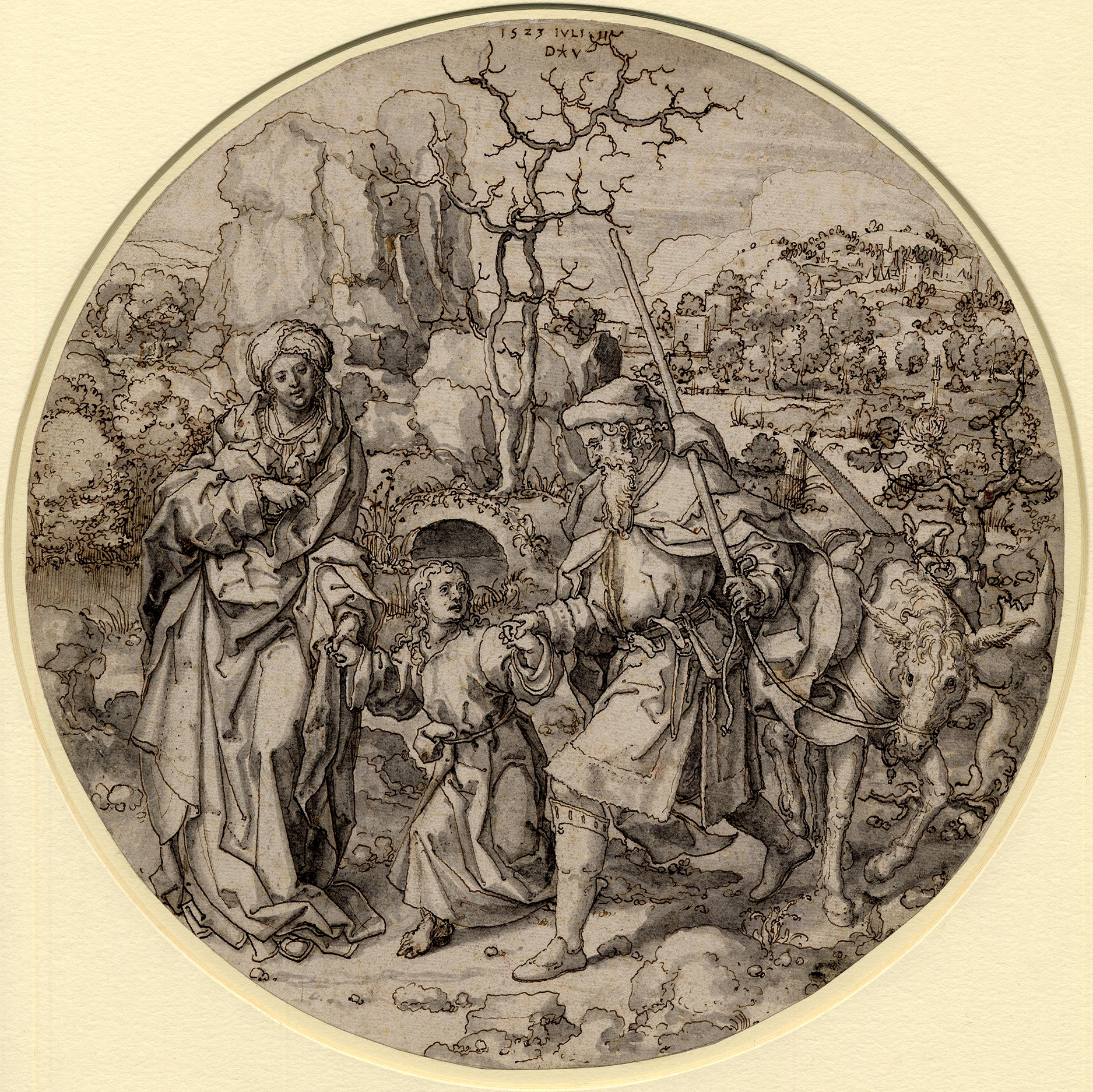
Dirck Vellert, The Return of the Holy Family from Egypt, pen, brown ink and brown wash on cream paper, dated 11 July 1523, London, British Museum.
Ellen Konowitz
In June 2026, Professor Konowitz presented an invited paper at the Warburg Institute of the University of London at the symposium “Early Netherlandish Drawings: 1400-1600,” organized by the British Museum in conjunction with its major exhibition (April-September 2026) of the same name. This paper discussed drawings by the stained-glass designer Dirck Vellert and drew from Professor Konowitz’s article “Dirck Vellert’s 1523 Drawings for Painted-Glass Roundels and the Versatility of Renaissance Typology” forthcoming in the Nederlands Kunsthistorish Jaarboek/Netherlands Yearbook for the History of Art. In September 2025, Professor Konowitz presented an invited paper on “Albrecht Dürer and the Netherlands: 1521-1530” at the workshop “The Rebirth of Netherlandish Painting in the Early Sixteenth Century: Antwerp Mannerism and its Discontents” held at the Centre for Reformation and Renaissance Studies at the University of Toronto.