



Department Mission
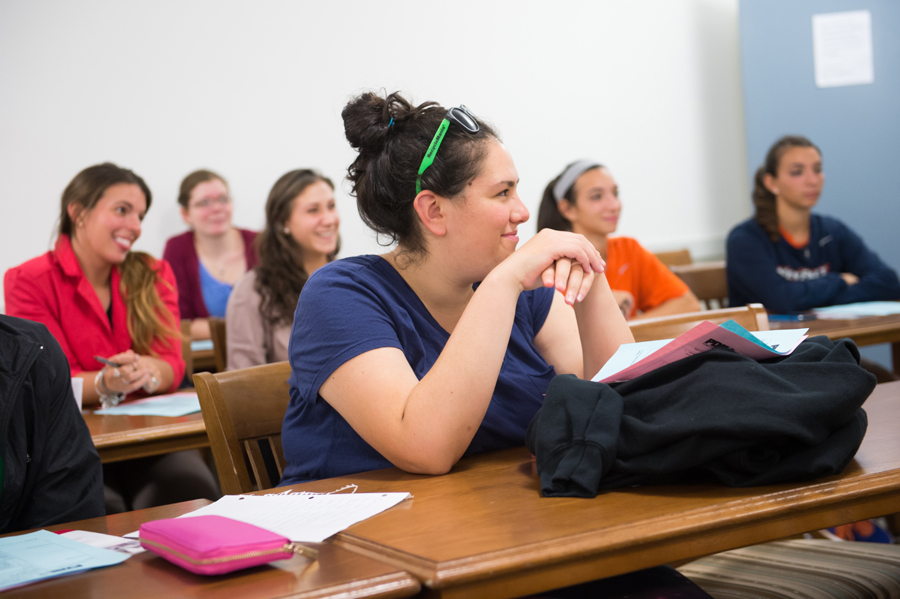
The Programs in Communication Disorders and Deaf Studies fill a regional need for liberal arts and professional education in speech, language, hearing, and deaf studies.
The undergraduate and graduate programs in Communication Disorders provide humanistic, multi-disciplinary preparation in speech-language pathology and audiology that emphasizes the nature of communication disorders across the life span, the scientific bases of clinical work, cultural diversity, professional ethics, and health care delivery systems.
Students who are well-prepared, academically and clinically, are expected to excel in graduate school in communication disorders and related fields, and/or as qualified, licensed, certified professionals in diverse educational and health care settings. Other key outcomes include advancement of knowledge in the fields of speech-language pathology, audiology, and the speech, language, and hearing sciences; and provision of clinical and outreach services to the community.
The programs in Deaf Studies and American Sign Language broaden students’ knowledge and understanding of deafness, Deaf Culture, and Deaf communities past and present; build competency in American Sign Language; facilitate effective, culturally sensitive communication with people who are Deaf and hard of hearing (DHH); and encourage positive interactions in social and professional settings. Deaf, hard of hearing and deaf-blind people are present in every realm of life and seek education and equitable employment, and employees with competency in ASL are in demand nationwide.
The Deaf Studies program equips students with the interpersonal skills, cultural competency, and communication skills needed to bridge the DHH and hearing worlds in relevant fields such as social work, counseling, education, speech-language pathology, and linguistics. Graduates will have the foundational skills required for entry into much-needed professions such as Teacher of the Deaf, ASL Teacher, and paraprofessional.