Two schools, one mission: Envisioning SUNY New Paltz as a hub for engineering education
What do engineering students and education students have in common?
At first glance, it might seem as though the overlap starts and ends with both disciplines beginning with the letter ‘e.’ We assume one group is more aligned with the proverbial left brain, thinking logically and analytically, while the other leans into right-brain characteristics like creativity and intuition.
But at a comprehensive University like SUNY New Paltz, educators and engineers often come together in ways that generate new and unexpected synergies. It turns out, both groups also have a lot to offer one another: Engineers can help aspiring STEM teachers become more fluent in the discipline, while educators can help future engineers with important skills in communication.
That insight is at the heart of a partnership that’s brought New Paltz students into local middle and high school classrooms to strengthen STEM education through community engagement.
Back to the beginning
This story began more than six years ago, when Jason Huang, associate professor of adolescence education, and Ping-Chuan Wang, associate professor of engineering, first mapped out a new interdisciplinary framework to bridge technical learning with teaching practice, while also providing engineering and education students with experience translating complex concepts into accessible lessons.
“We were just chatting, and [Wang] was like ‘Well, we have expertise in science, and you have student teachers, so maybe we can work together,” said Huang. “We decided there was an interesting potential there.”
Collaborations like these are increasingly valuable in today’s job market. Employers expect graduates to bring strong communication, teamwork and leadership skills to the workplace. It's one example of how New Paltz shines, offering engineers the opportunity to work alongside students and faculty in other disciplines, creating exceptional career-readiness.
“We know that people fail in their career not because of their technical skill, it’s their people and communication skills,” said Wang. “There are not so many engineers involved in the area of education, but we need to make engineering relevant to kids, to daily life. We want to make that bridge with this shared effort.”
At the same time, education students largely rely on mandated field work hours to grow their experience, but Huang has long been an advocate for inquiry-based learning, too. That’s where learners explore topics through questions, research and hands-on projects rather than just receiving information.
To help close that gap, Huang and Wang developed this interdisciplinary mentorship model that pairs students from New Paltz’s School of Science & Engineering with peers in the School of Education, creating the conditions for technical knowledge and soft skills to develop side by side.
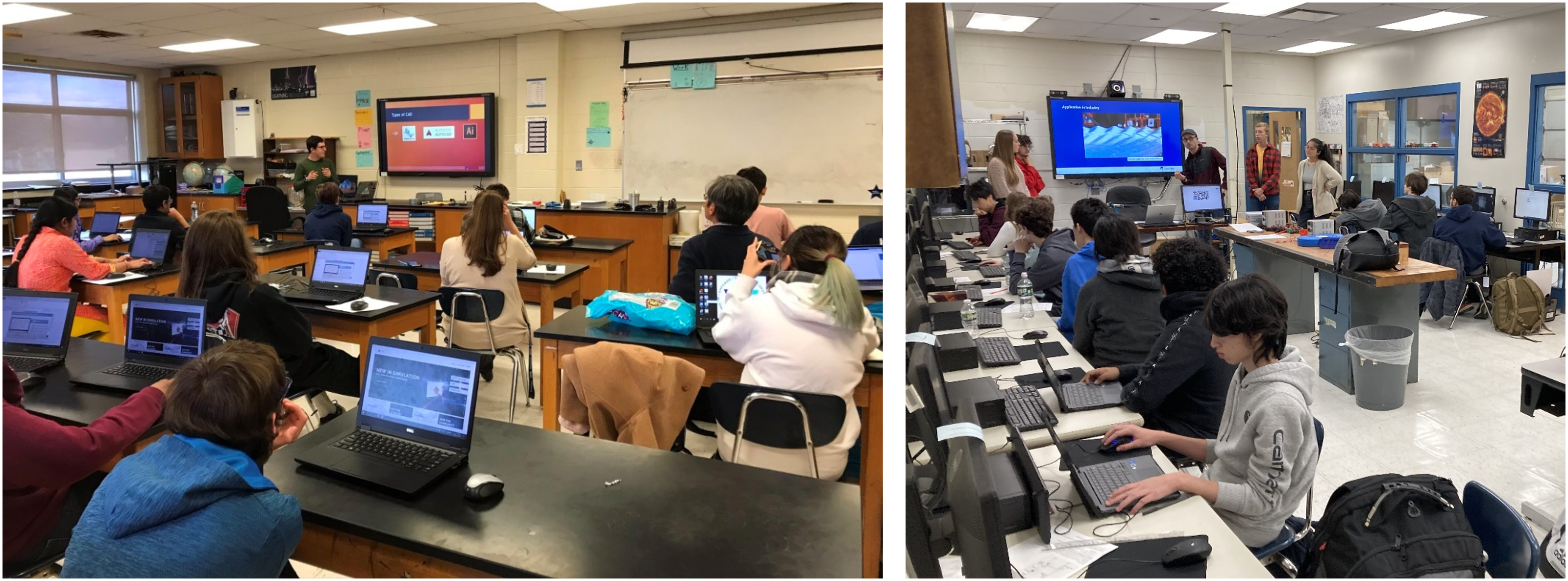
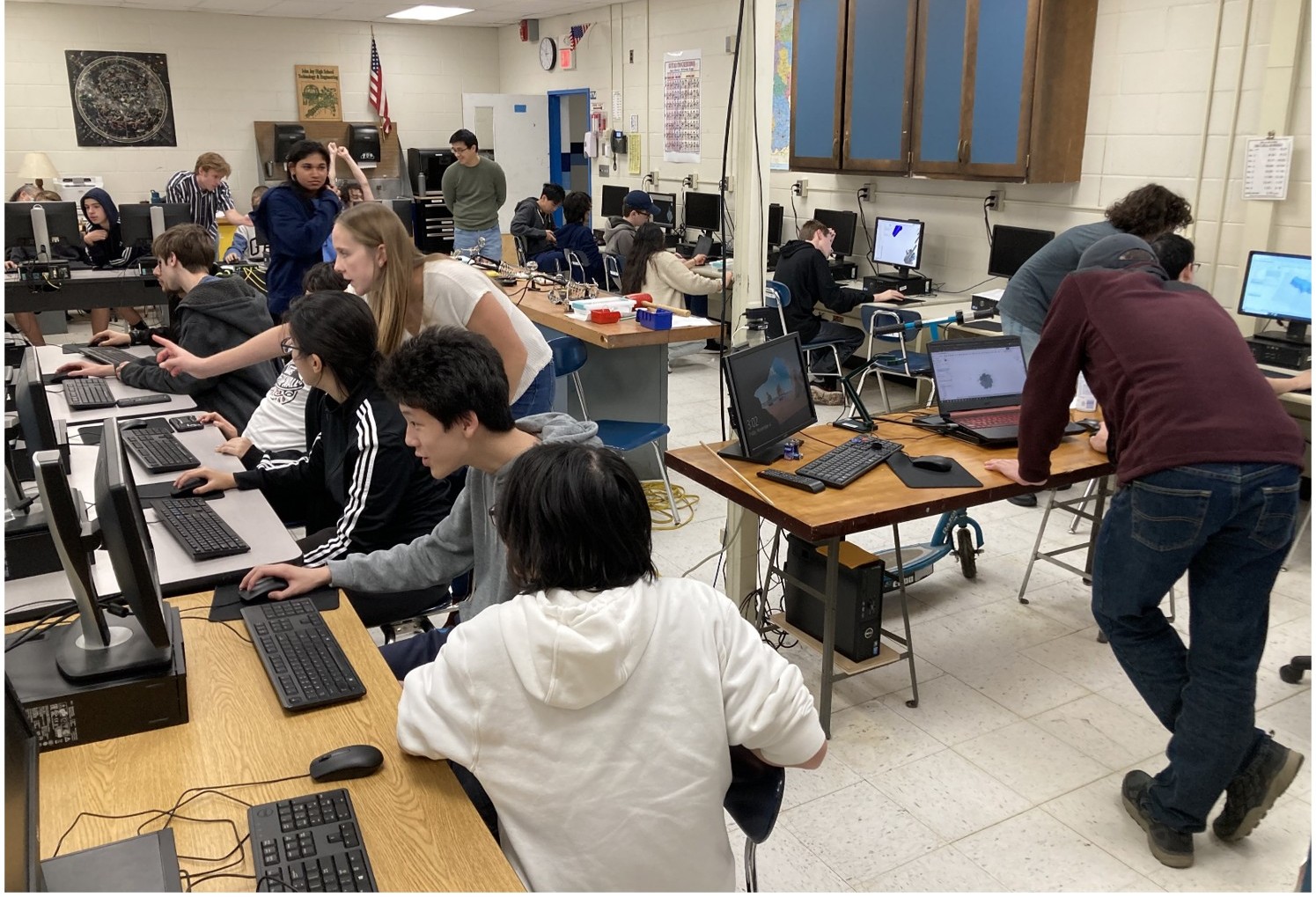
But staying here at New Paltz and putting students from both schools in a room together wasn’t how this would come to life. Leading them in their collaboration was a project assignment each semester, where the students met with local middle or high school to put their shared skills to work.
Wang helped initiate a starting point with the John Jay High School Robotics club, and this pilot program showed tremendous potential right away. Even amidst the pandemic pause in 2020 and 2021, the program flourished from those humble beginnings, with increased student participation and expansion to today. That’s also been thanks to two funding grants along the way: a Research and Creative Projects Award from the Provost Office and the NYSUT/NEA “Take a Look at Teaching” grant.
Now, they are also developing general workshops that can be delivered by high school teachers themselves, including demonstrations to regional STEM high school teachers at the March 2025 cohort for the New York State Master Teacher Program.
The work that they are doing together is far ahead of what they see from other universities in these sectors. Others that they’ve talked to have tried it but couldn’t overcome the differences in the fundamentals of how the two cohort's work.
"These are new ideas,” said Huang. “The concept of working with education and engineering is pretty new. It’s something we created, and we haven’t seen other papers on this. We have seen a lot of positive feedback from our presentations.”
A Productive Tension
The program has been through several different iterations since it launched, but ensuring student success has always been the guiding principle. With two very different majors joining together to work on something new, it was hard to know what to expect right away.
At first, when the cohort met, the education students would sit on one side of the room, and the engineers on the other side. But gradually, they came together, overcoming different viewpoints to help one another become stronger scholars and professionals.
“We realized that tension was good,” Huang said. “If they continue to work together, we can show the education students the importance of having expert knowledge.”
While education students gained a deeper understanding of the technical foundations of STEM teaching and learning, the engineering students were developing a feel for translating that deep knowledge into language and lessons that are accessible to non-experts.
"I was intrigued about the engineering side of things,” said Meghan Stuart ’25 (Mathematics) ’26g (Adolescence Education), an early-career researcher working toward an education master’s degree. “Getting to see more of an application hands-on approach to the math we are teaching was so interesting to me.”
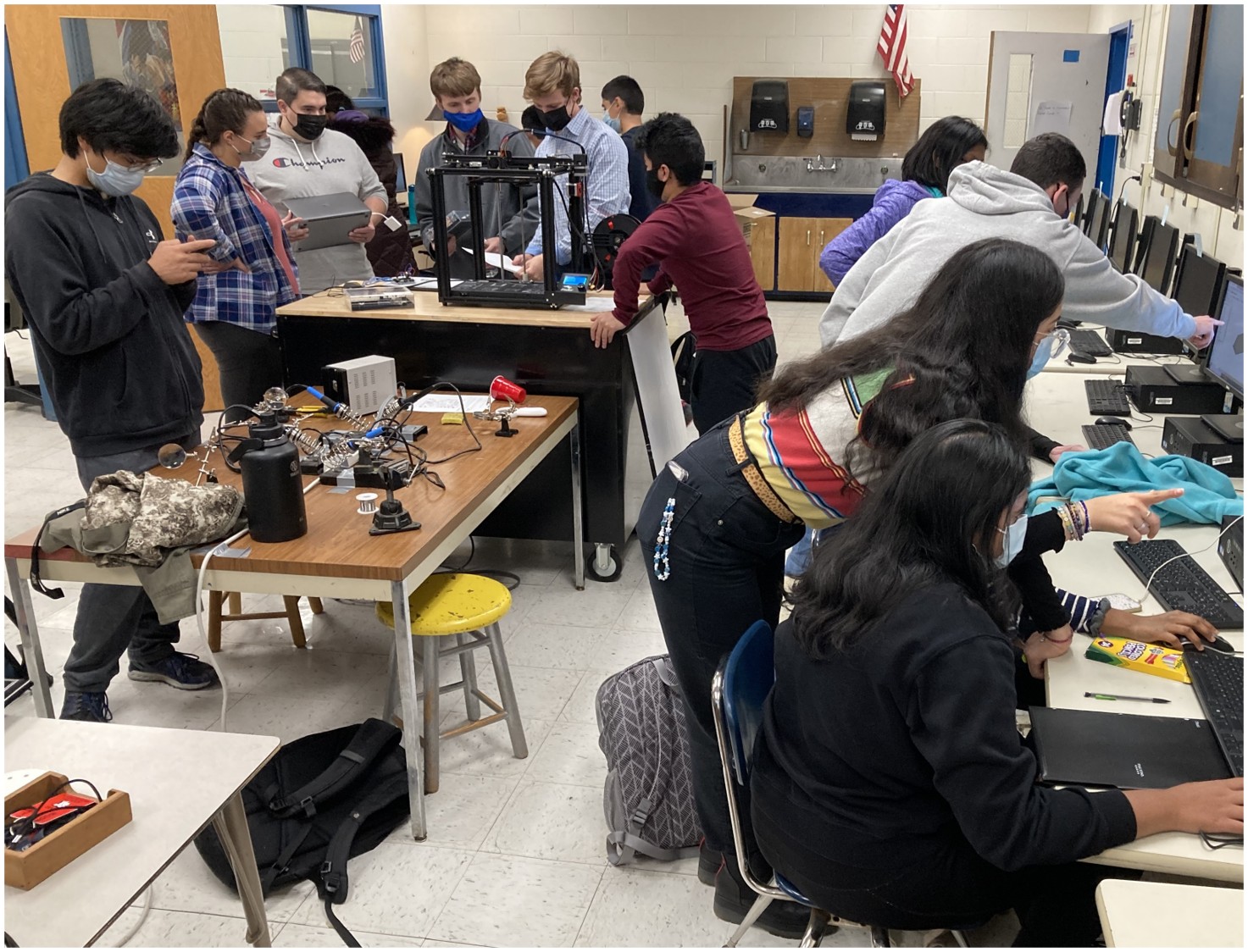
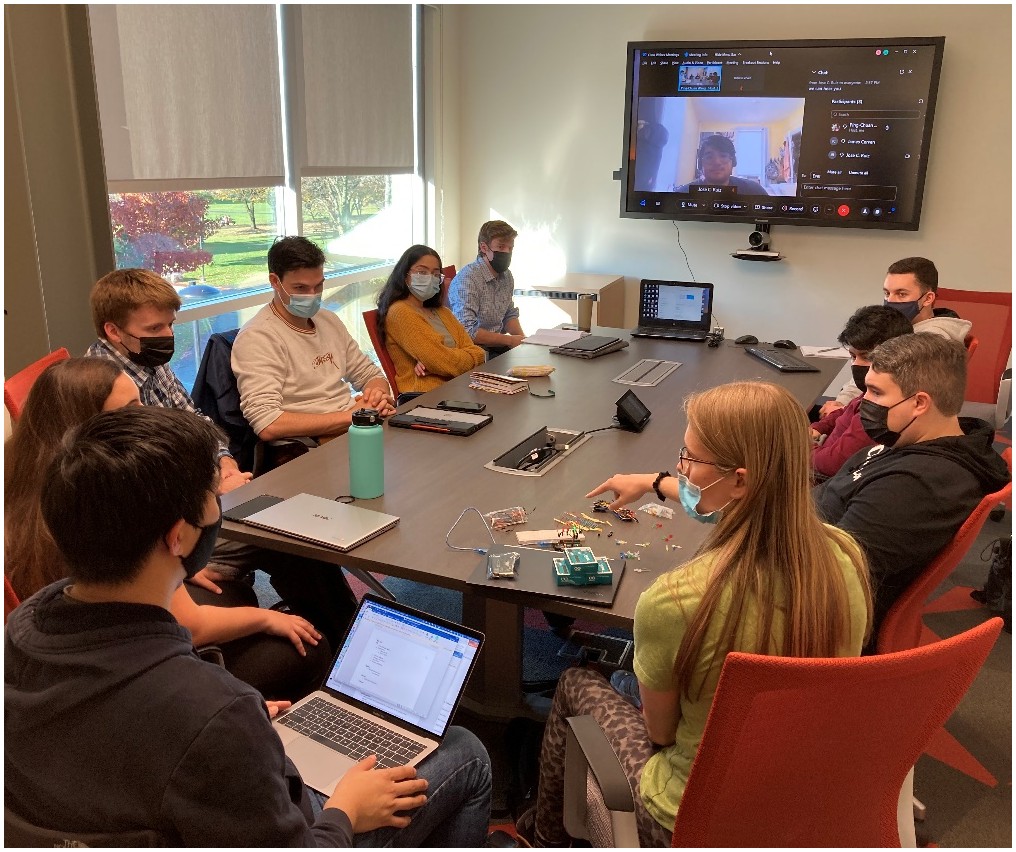
After her experience working with Wang and Huang, Stuart prepared a presentation alongside her new engineering colleagues, demonstrating her growing (and marketable) skillset in co-teaching.
“I feel like I got new connections with people that I never would have gotten,” said Stuart. “I saw a better version of how math can be applied in real-world applications.”
One of the engineers in that same cohort was Paula Pino ’28 (Electrical Engineering). Originally trained as a sculptor, Pino decided to return to school to pursue career opportunities in engineering, but found in this program a perspective on teaching that he hadn’t considered.
"I don’t have an education background, so I never quite thought of things in this way,” said Pino, who is also the president of the New Paltz Engineering Club. “As engineers, we think of all of the cool, complicated things we can make, but it’s realizing you need to clarify when you explain it.”
His takeaway? “Engineering isn’t just about solving problems in a vacuum,” he said. “It’s about showing other people how we can solve problems and hearing from them what other problems need to be solved.” Without the soft skills that they are putting to work with this interdisciplinary approach, none of that would be possible.
Building a model with reach beyond campus
Now, many years into the launch of this partnership, early students of the program are working in the field, implementing what they learned.
"The program taught me that it was not just about understanding what the concepts are, but figuring out how we can effectively teach them,” said Seth Pearl ’21 (Mechanical Engineering), whose cohort focused on working with John Jay High School’s robotics club. “It was a big springboard for me to explore and branch out to other departments.”
Pearl said that being able to work with high school students helped him recognize what his strengths were and where he needed support from others.
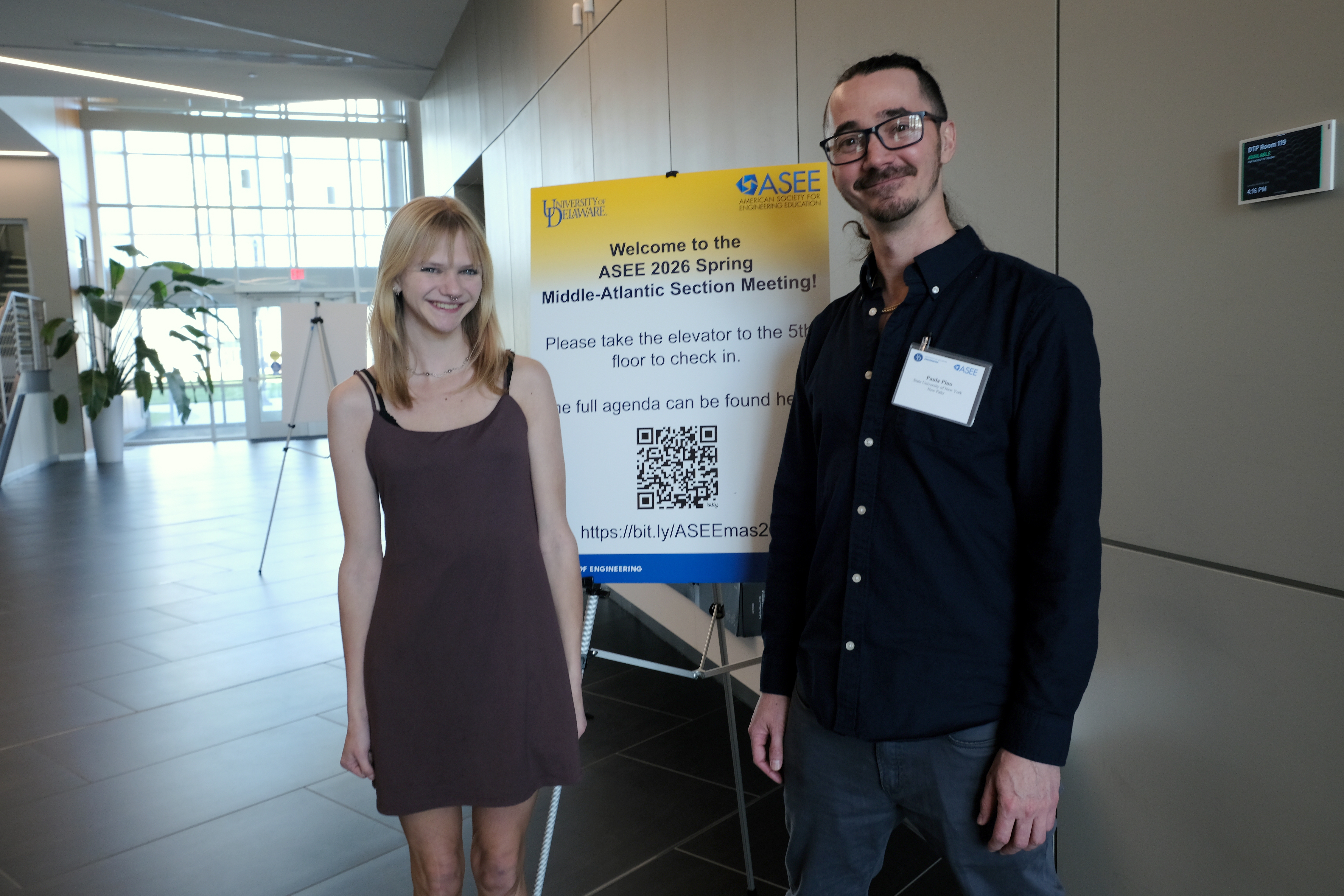
Meanwhile, Wang, Huang and the current team are looking to share this model with the world beyond New Paltz. At the 2026 American Society for Engineering Education (ASEE) Middle Atlantic Section Spring Conference at the University of Delaware, they presented on how the project has evolved and the impact that it has for both engineers and educators, adding another layer to the professional development experience for students.
"The conference was deeply inspiring," said Pino. "I was proud to see that SUNY New Paltz had a strong presence at the conference and was recognized for it."
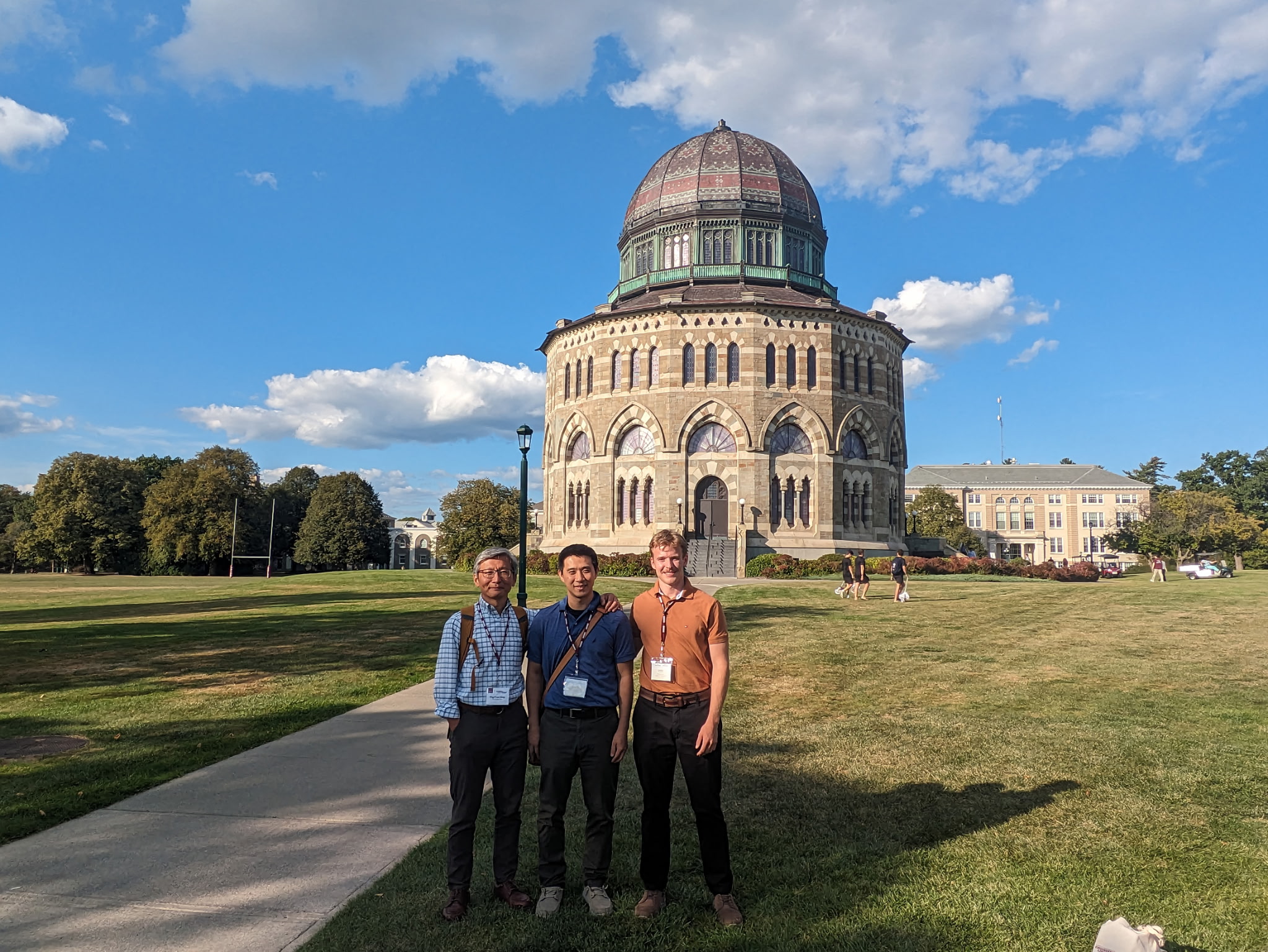
Huang and Wang have also collaborated with colleague and Visiting Assistant Lecturer Graham Werner ’20 (Mechanical Engineering) ’25g (Electrical Engineering), along the way and to publish their process and outcomes in academic journals like the International Journal of Engineering Education and the Engineering and Liberal Education Symposium.
They hope this model can continue to grow and be replicated elsewhere, providing schools with practical STEM resources while giving students meaningful interdisciplinary experience.
"This is a great collaboration that benefits all ends,” said Huang. “We are starting to see a lot of benefits that are beyond our initial vision. I don’t know where this is going to take us next, but I’m excited to be a part of the journey with the other faculties and students and see what impact we can make here at New Paltz and in the community.”