Bridging the space between: What it’s like to work as an artist at NASA
Art and science may seem to some like entirely distinct disciplines—one grounded in emotion and imagination, the other in logic and evidence. But at their core, both are driven by a shared pursuit: the desire to understand and express the truths of our world and beyond.
For Wes Buchanan ’21 (Painting & Drawing), a visual artist at NASA, that connection isn’t just abstract—it’s inherent to their professional identity.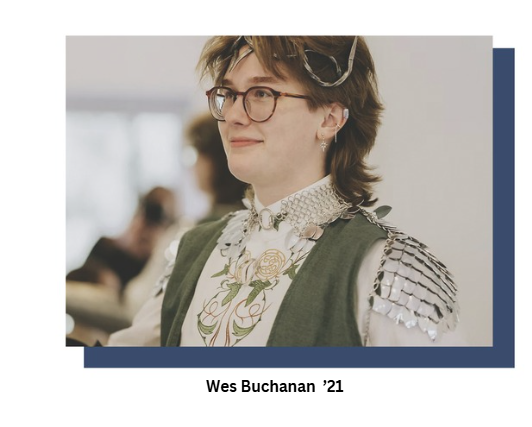
In bridging creative expression with scientific inquiry, Buchanan (they/them) shows how art can make complex material not only digestible, but deeply human, helping the public grasp the wonder and meaning behind NASA’s work.
Or, as Buchanan puts it: “Science and art both require making multiple iterations to ensure that the result is what is intended, accurate, and, ultimately, awe-inspiring.”
In this role, Buchanan is following in their father’s footsteps, who was a spacecraft engineer at NASA, while also forging a new path as an animator and illustrator for NASA’s Conceptual Image Lab. The Lab creates animation, design and visual effects aimed at educating and entertaining the public on NASA’s work in astrophysics, heliophysics and planetary and Earth sciences.
Its artists, including Buchanan, work closely with the world's leading astronomers, scientists and engineers to bring theory, design, research and exploration to life in a way that’s both scientifically accurate and visually compelling. Artists use a wide range of materials, techniques and software to develop animations and other creative work designed to educate and amaze.
“Sometimes, just posting data, charts and graphs isn't necessarily enticing to people who don't understand how to speak scientific language,” they said. “Our job is to take science and make it palatable and visually interesting, so that people who see what we’re doing are inspired and can digest complex science and mission information. At the root of it, we create artwork that reflects the missions of NASA.”
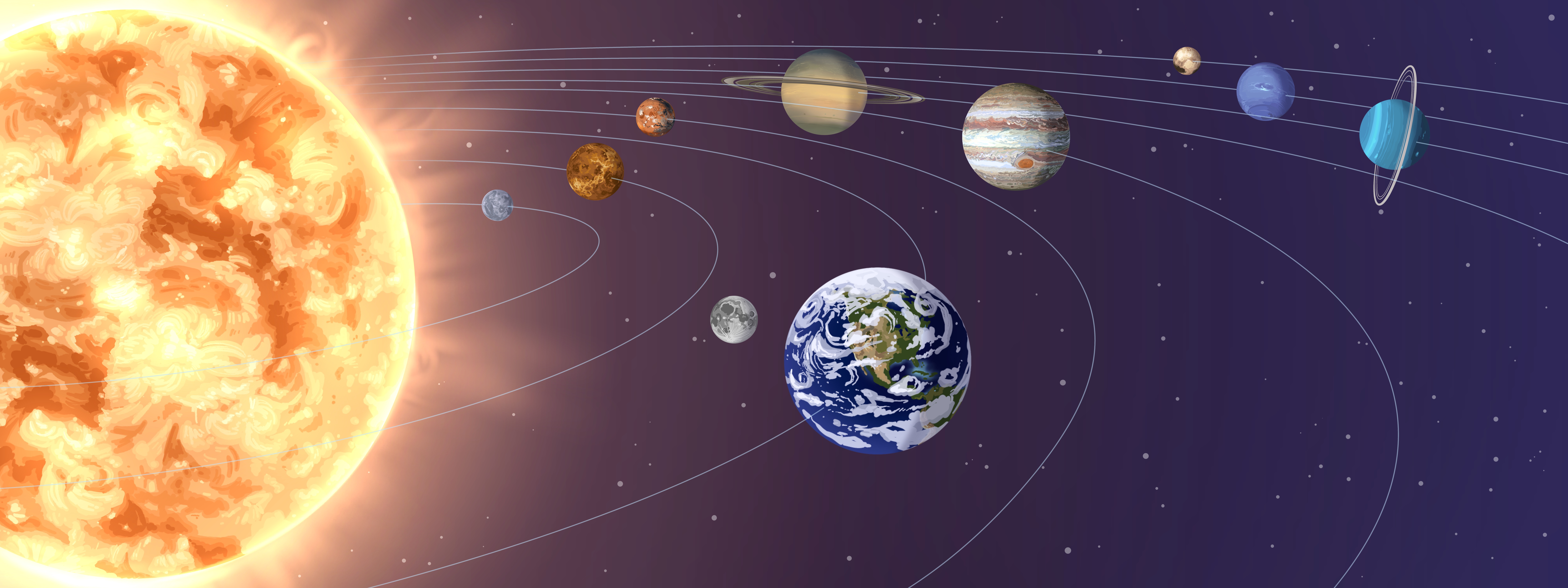
A great example of the impact of these endeavors is Conceptual Image Lab’s animations used for promoting NASA’s Endurance rocket, which launched in 2022. The mission was sent to measure Earth’s global electric potential, and successfully for the first time confirmed a 60-year-old hypothesis about Earth’s electric field.
“The animations we created for this mission were made two years after the launch took place, as a way to show the impact of Endurance,” they said. “This research has real implications for enhancing our understanding of how the Earth has evolved. The science is complex, so by presenting the results of this exploration as this cool-looking hologram, my team and I are able to grab people's attention on this mission’s importance.”
Buchanan has also worked on promoting the Artemis I mission and its CubeSats satellites. In 2022, Buchanan displayed their illustrations connected to that mission at the annual Google Arts & Culture Exhibition.
Though a handful of the CubeSats satellites ended up failing to launch, Buchanan’s work was critical in maintaining public support for the Artemis I mission.
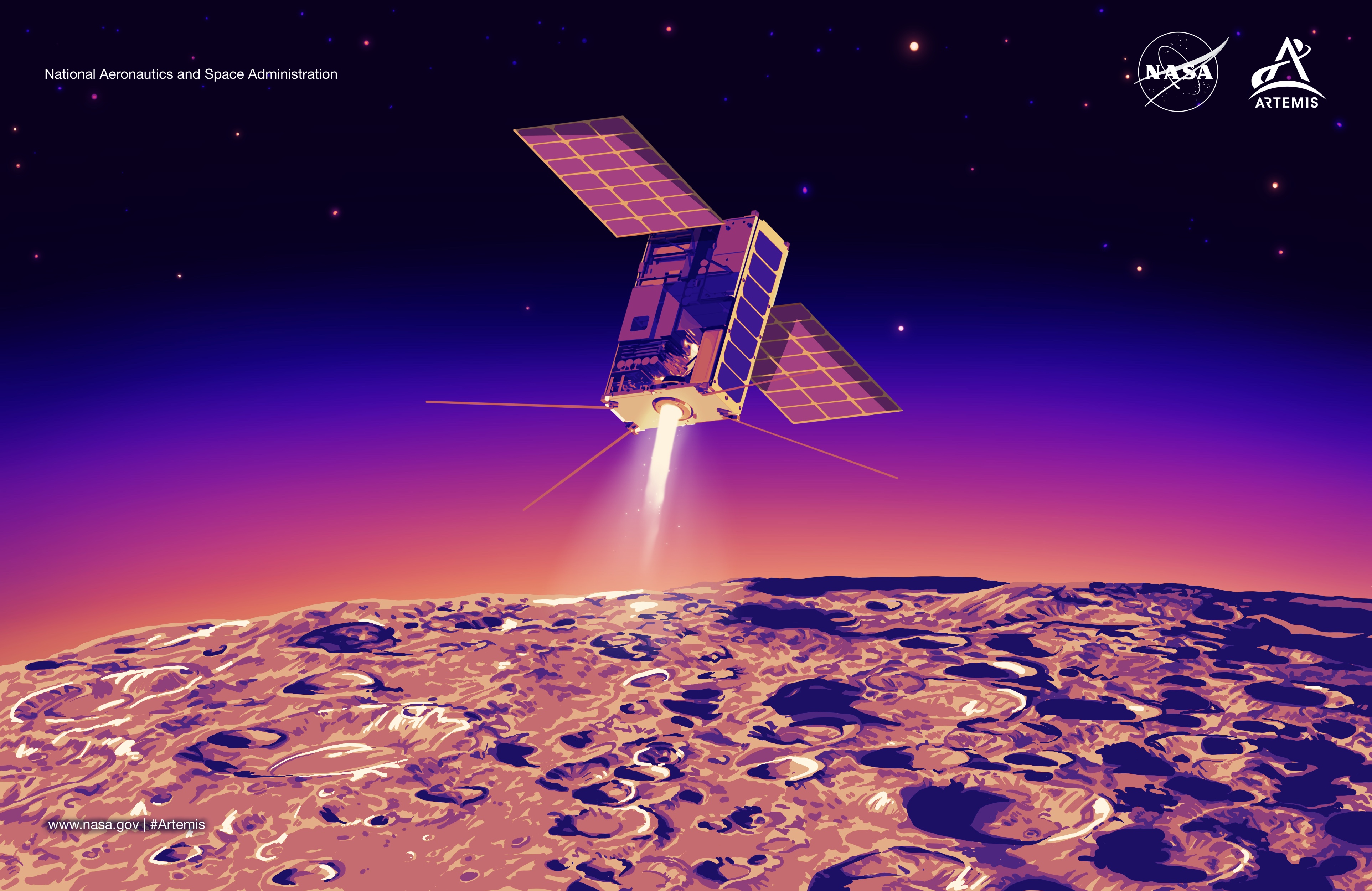
“It's part of our job as artists at NASA that we preserve the science that was intended to happen, so we can try again someday,” they said. “Not to mention highlighting parts of missions that aren’t as high visibility, but just as important.”
Ultimately, the most rewarding part of Buchanan’s work is communicating the value of science clearly to the public through art.
“We don't have a crystal-clear image of a black hole, but we have the science to support what it would look like if you could see it that clearly,” they said. “Us artists, especially at the Lab, are tasked with showing you a crisp, clear look at what things theoretically look like out in the universe.”
They join other scientific artists who have engaged in similar work. Art and science have long been fused together by others, such as NASA’s Scientific Visualization Studio, to help depict other complex topics, like Earth’s plant life on land and sea through a two-decade time span, animations of a moon tour, dynamic solar magnetic fields, and more.
“That’s where our role as artists come in, is to share a depiction of what the science at NASA looks like, and the interstellar as a whole.”
Connecting the dots from SUNY New Paltz to NASA
While being raised by an engineer showed them the ways science could be promoted through art, SUNY New Paltz’s Honors Program and academic major helped Buchanan sharpen the skills to craft the unique career they have today.
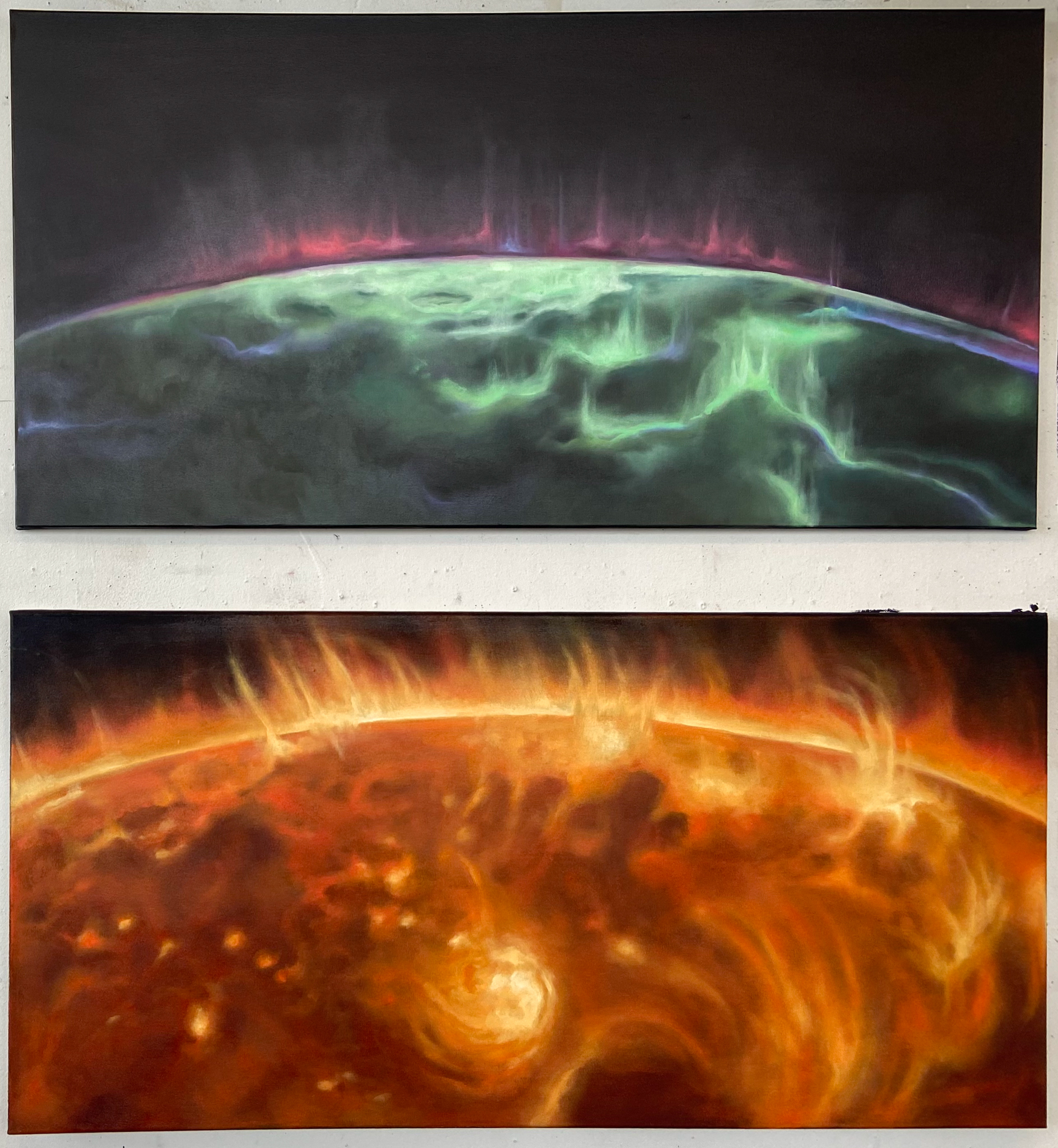
Buchanan’s artistic flair, combined with their love and fascination of science, inspired their senior thesis for both SUNY New Paltz’s Bachelor of Fine Arts program and Honors Program, titled “Halo Orbit,” which helped forge a connection that led to their dream career.
“The Honors Program gave me community, it gave me confidence and then it introduced me into networking,” they said. “You need to understand how to talk to people about how they got to where they are today, and how you could get there. My Honors presentation is where I met [NASA’s Head of Science] Dr. Nicola Fox. I'm endlessly thankful that I was in the Honors Program, without which I likely would not have had the space to forge that initial connection.”
Buchanan also credits the influence of the New Paltz Painting Program, and more specifically, former faculty member Robin Arnold, for helping them develop a personal, novel and proficient artistic approach.
Buchanan had originally gone into the program thinking they would further pursue their passion for hyper-realistic acrylic painting, but Arnold showed them another, though more meticulous, method to that art form.
“She told me that I was going to try something new when taking her course, and despite my bullheadedness at the start, it completely changed my understanding of how I paint,” they said. “Oil painting opened a whole new world of color and form. Suddenly, painting the cosmos was easier and had more depth than I could have imagined. I was constantly pushed to try new ways to showcase the science I loved so deeply.”
Studying art at New Paltz taught Buchanan the importance of community in shaping creativity. By opening up their creative ideas to feedback from peers and faculty in the Department of Art, it allowed Buchanan to be a better artist.
“New Paltz gave me the support I needed to be a scientific artist,” they said. “My desire to merge science and art wasn’t met with any resistance. At the same time, my peers and my professors all showed me ways to think conceptually about what I was trying to create and not get too caught up in being scientifically accurate with all that I painted. I hope they all know how much they’ve done for me, in the end.”
Click here to learn more about the Department of Art at SUNY New Paltz.